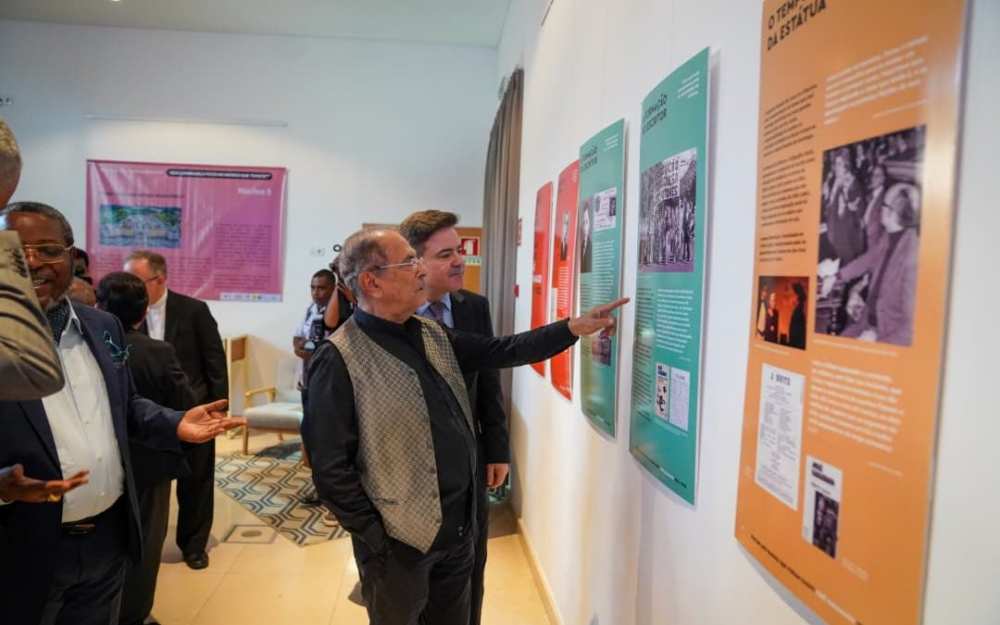
(AseanAll) — President of the Republic of Timor-Leste, J. Ramos-Horta officially opened Portuguese Language Week 2026 at the Portuguese Cultural Center in Dili on May 4, 2026, coinciding with a high-level meeting of CPLP Education Ministers.
Reflecting on the nation’s linguistic journey, the President praised the “extraordinary” evolution of Portuguese in Timor-Leste, noting that the number of speakers has grown from less than 1% in 2000 to over 30% today and attributed this success to the strategic vision of Timorese leaders and the steadfast cooperation of partners like Portugal and Brazil.
During the event, the Head of State emphasized that the language is “very important for identity and the specificity of Timor-Leste,” while serving as a bridge to global academic success. The President highlighted the practical benefits for students, explaining that a “licentiate degree, master’s, or doctorate [in Portugal] is valid throughout Europe” under the Bologna Accord. Encouraging the younger generation to embrace their natural talent for communication, the President also urged them to “not be afraid of learning languages,” noting that mastering Portuguese alongside English and regional languages creates a unique competitive advantage on the international stage.
Addressing Timor-Leste’s integration into ASEAN, President Ramos-Horta encouraged the youth to embrace their natural talent for languages by becoming true polyglots. The President clarified that while English serves as a vital working language within the region, it does not replace national or official languages also urged the younger generation to excel in Portuguese, English, and Bahasa Indonesia, asserting that multilingualism is a fundamental strength that will empower Timorese citizens to navigate and lead in an increasingly interconnected world.