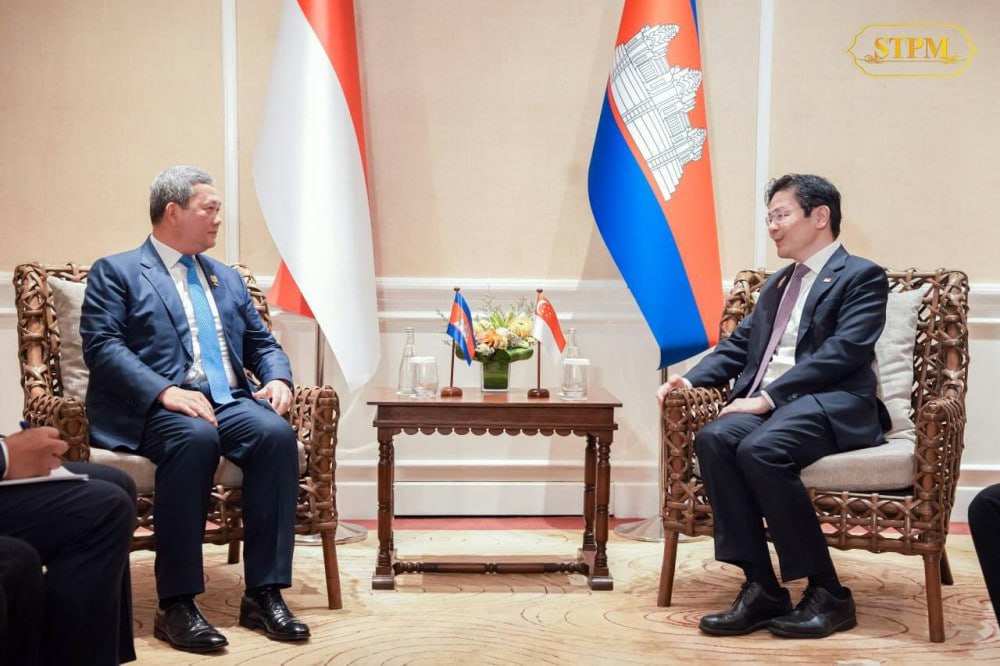
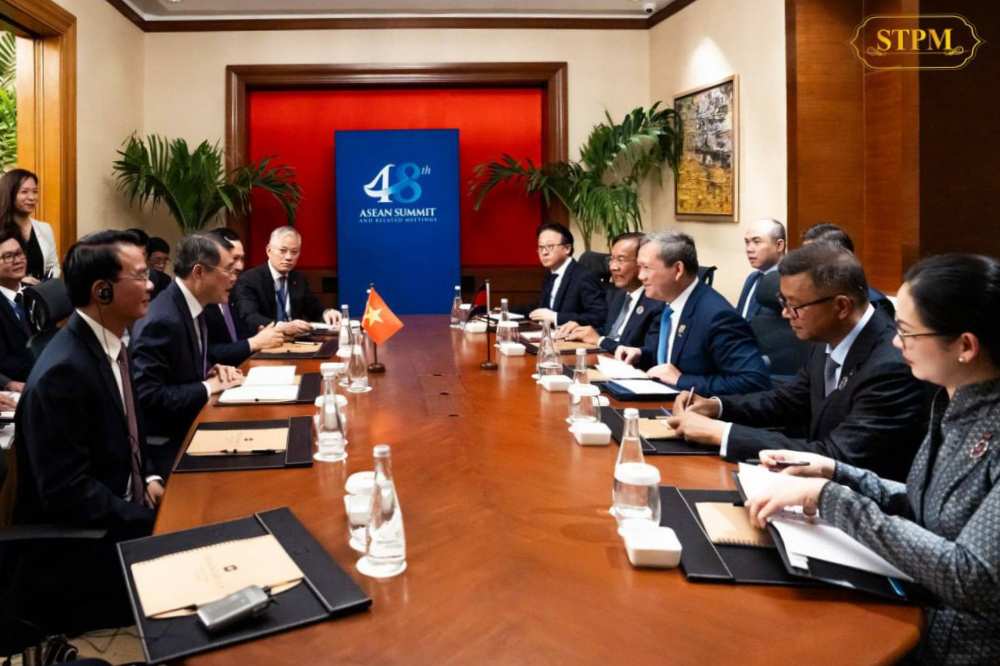
Cebu, May 8 (AseanAll) — On May 8, 2026, at the Mactan Expo, in Cebu, the Philippines, Thai Prime Minister and Minister of Interior Anutin Charnvirakul and spouse attended the opening of the 48th ASEAN Summit together with other ASEAN leaders and representatives.
The Prime Minister attended and delivered an intervention at the Plenary Session of the 48th ASEAN Summit. The session was also attended by ASEAN Leaders and representatives, the ASEAN Secretary‑General, and the President of the Asian Development Bank (ADB), in his capacity as Guest of the ASEAN Chair.
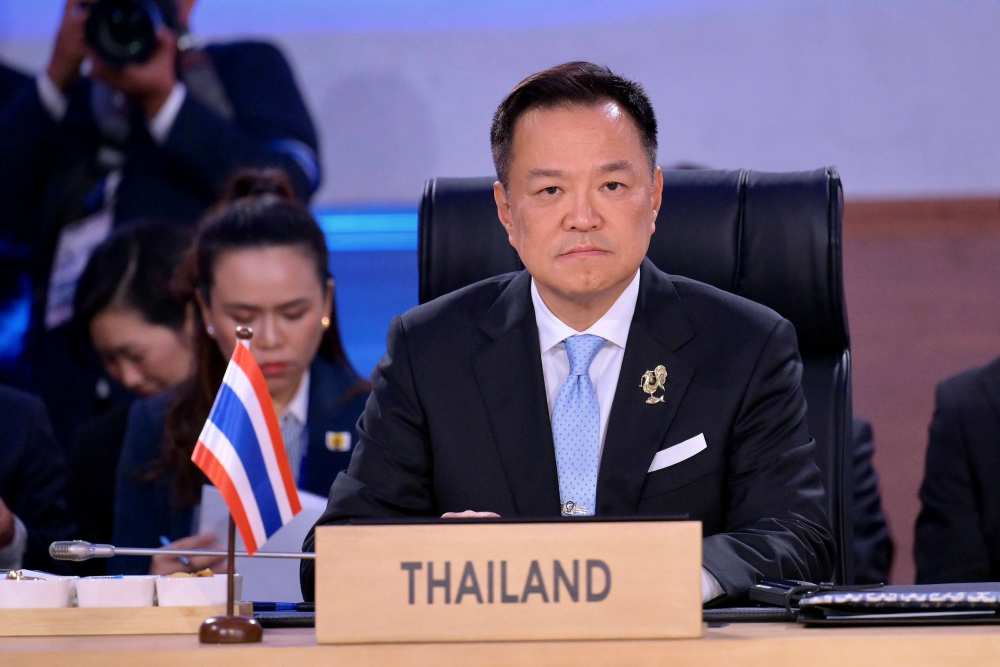
The Prime Minister first conveyed his congratulations to the Philippines on its ASEAN Chairmanship and to Prime Minister Le Minh Hung of Vietnam on his election. He also thanked other ASEAN leaders for their kind words on his re-appointment as Prime Minister of Thailand.
The Prime Minister affirmed Thailand’s full commitment to working with all Member States to ensure that ASEAN continues to be a pillar of peace, stability, and prosperity in the region. This is his second ASEAN Summit as Prime Minister of Thailand, and the meeting was held at a time of even greater uncertainty. But ASEAN has confronted crises before, and each time, it emerged stronger and more vibrant. The Prime Minister expressed confidence that ASEAN can rise to the challenge once again.
However, the region must remain united, adaptive, and forward-looking. The theme “Navigating Our Future, Together” is therefore both timely and relevant, reminding everyone that resilience today must be built collectively. That collective resilience is now being tested in real time by developments in the Middle East, with repercussions for energy prices, food security, and the livelihoods of peoples. This is why ASEAN solidarity matters more than ever.
According to the Prime Minister, nowhere is this more evident than in energy security. Disruptions along key maritime chokepoints have exposed just how vulnerable global supply chains are, while underscoring the importance of safeguarding maritime security and freedom of navigation. This is a wake-up call for ASEAN to accelerate practical cooperation, from advancing the ASEAN Power Grid and making use of the ASEAN Petroleum Security Agreement, to scaling up investment in bankable renewable energy projects, including solar and biofuels.
Similar pressures have been seen on food security, the issue that all ASEAN leaders raised concern. Rising energy and fertilizer costs are straining production and prices across the region. ASEAN needs stronger cooperation across the entire food value chain, while building on practical models already in place, such as the Thailand-Singapore rice trade arrangement that helps secure supply in times of need. ASEAN should explore expanding similar standby arrangements to other essential commodities to strengthen the region’s collective preparedness in times of crisis.
The Prime Minister emphasized that, ultimately, ASEAN must be able to protect what matters most, that is, its people. During the recent conflict in the Middle East, he personally chaired Thailand’s war room to coordinate the evacuation of thousands of Thai nationals. It was not an easy task. But it also demonstrated the real value of ASEAN coordination. He commended Singapore for extending a helping hand in evacuating other ASEAN nationals on its special flight. This is ASEAN solidarity in action. This experience also carries an important lesson, that is, being able to rely on one another in times of crisis demonstrates in a tangible way what ASEAN is all about. It reinforces the sense that the citizens belong not only to their own nations, but also to a wider ASEAN community.
The challenges today are increasingly interconnected. Energy, food, and human security are part of the same equation. ASEAN community-building must therefore evolve with the realities it faces.
In conclusion, the Prime Minister mentioned the ASEAN Leaders’ Statement on the Response to the Middle East Crisis which reflects shared commitment of Member States to address challenges in a coordinated manner, and added that Thailand stands ready to work with all Member States to translate this into action, so that ASEAN remains relevant and resilient in an increasingly uncertain world.
At the Plenary Session of the 48th ASEAN Summit, ASEAN leaders agreed upon the CEBU Protocol To Amend the Charter of the Association of Southeast Asian Nations, which prescribes inclusion of the Democratic Republic of Timor‑Leste as a Member State of ASEAN. They also adopted the following four documents: 1) ASEAN Leaders' Statement on Priority Actions for Regional Resilience in Response to the Implications of the Situation in the Middle East on the Region; 2) ASEAN Leaders' Statement on the ASEAN Convergence on Disaster Response: 3) The ASEAN Strategic Protocol for Emergency and Comprehensive Transformation (ASPECT) Framework; and 4) The ASEAN Declaration on the Empowerment of Youth in Climate Action and Disaster Resilience.