(AseanAll) — “Today, Indonesia is a pillar of multilateralism. Indonesia continues to play an influential role in shaping international cooperation across the Asia-Pacific and the wider Global South.” UN Secretary-General António Guterres made these remarks in his keynote address at the Foreign Policy Circle Talks (FPCT), themed “Eight Decades of the United Nations: What's Next?”, held at Gedung Pancasila, Indonesia’s Ministry of Foreign Affairs, on 19 October 2026.
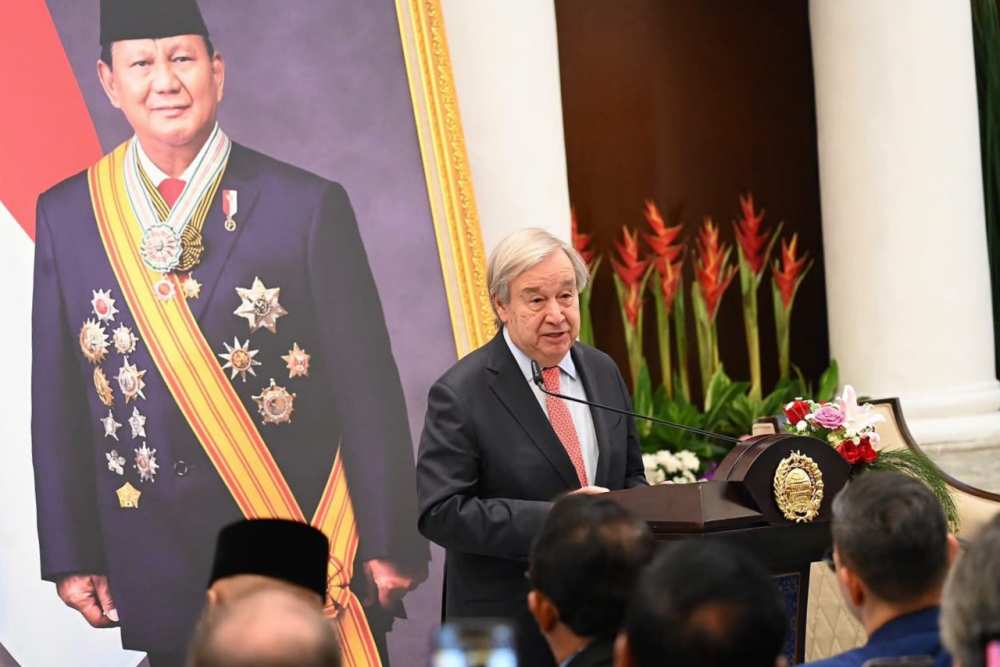
The Secretary-General expressed his appreciation for Indonesia’s consistent support for the United Nations and a global order grounded in multilateral cooperation. He highlighted Indonesia’s standing as a respected diplomatic bridge-builder, its contributions to strengthening ASEAN-UN relations, and its commitment to international peace and security. He also commended the nearly 2,000 Indonesian personnel currently serving across seven UN peacekeeping missions.
Organized by the Ministry of Foreign Affairs of Indonesia, FPCT is a strategic dialogue forum that brings together experts and practitioners to exchange ideas and perspectives on global issues and Indonesia’s foreign policy. This edition focused on the future of the United Nations and multilateralism, with the Secretary-General delivering the keynote address. The event was opened by Indonesian Foreign Minister Arrmanatha Nasir.
In his opening remarks, Indonesian Foreign Minister Arrmanatha reaffirmed that Indonesia’s commitment to the United Nations is deeply rooted in its Constitution and longstanding diplomatic tradition. He recalled that Indonesia and the United Nations were both born in 1945, sharing a common aspiration for a world built on peace, freedom, justice, and human dignity.
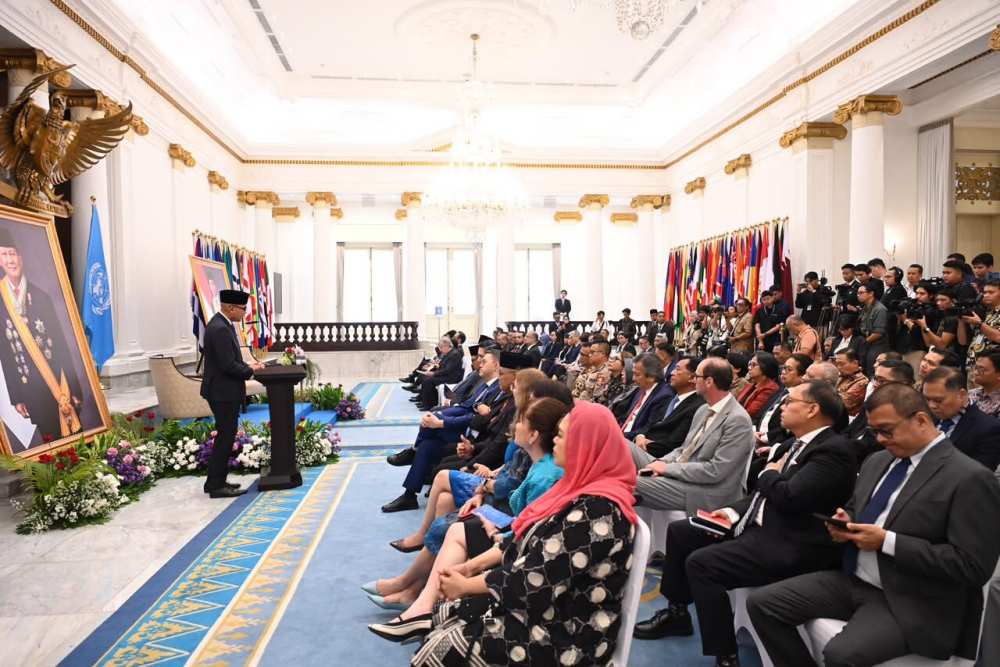
The Foreign Minister also underscored the need to renew the multilateral system to keep pace with a rapidly changing world. “We cannot answer twenty-first-century questions with a twentieth-century blueprint,” he emphasized. Indonesia, he added, remains committed to advancing UN reform to make the organization more inclusive, effective, and responsive to the needs of its Member States.
Arrmanatha further reaffirmed that Indonesia’s independent and active foreign policy, respect for international law, and commitment to the UN Charter will continue to guide its contributions to multilateral cooperation. These commitments are reflected in Indonesia’s active participation in UN peacekeeping, efforts to strengthen UN governance, and candidature for a non-permanent seat on the UN Security Council for 2029–2030.
Echoing these views, the Secretary-General stressed the need to strengthen multilateral institutions to address global challenges, including peace and security, development, climate change, and artificial intelligence. “But the answer to deepening frustration with multilateralism is not less multilateralism. It is better multilateralism,” he said.
The Secretary-General also highlighted Bhinneka Tunggal Ika, Indonesia’s principle of unity in diversity, as an example of how diversity can strengthen multilateral cooperation. Drawing on Indonesian batik as a cultural tradition shaped by diverse influences while retaining its distinct identity, he observed that “Indonesia's experience reminds us that cooperation across differences is not merely possible, it is essential.”
The FPCT brought together a broad range of participants, including former Indonesian Foreign Ministers and Deputy Foreign Ministers, members of the House of Representatives, senior diplomats, academics, media representatives, and foreign policy experts and practitioners.
The FPCT formed part of the Secretary-General’s official visit to Indonesia on 18–19 October 2026. During the visit, he was received by President Prabowo Subianto and visited the Indonesian National Armed Forces Peacekeeping Centre in Sentul.
This marked António Guterres’ first official visit to Indonesia in his capacity as UN Secretary-General. He had previously visited Indonesia to attend the IMF–World Bank Annual Meetings in 2018, the G20 Summit in 2022, and the ASEAN Summit in 2023. The last official visit to Indonesia by a UN Secretary-General was undertaken by Ban Ki-moon in 2012.
The visit provided an important opportunity to further strengthen the Indonesia–UN partnership, reaffirming their shared commitment to international peace and security, multilateralism, and collective action to address global challenges.
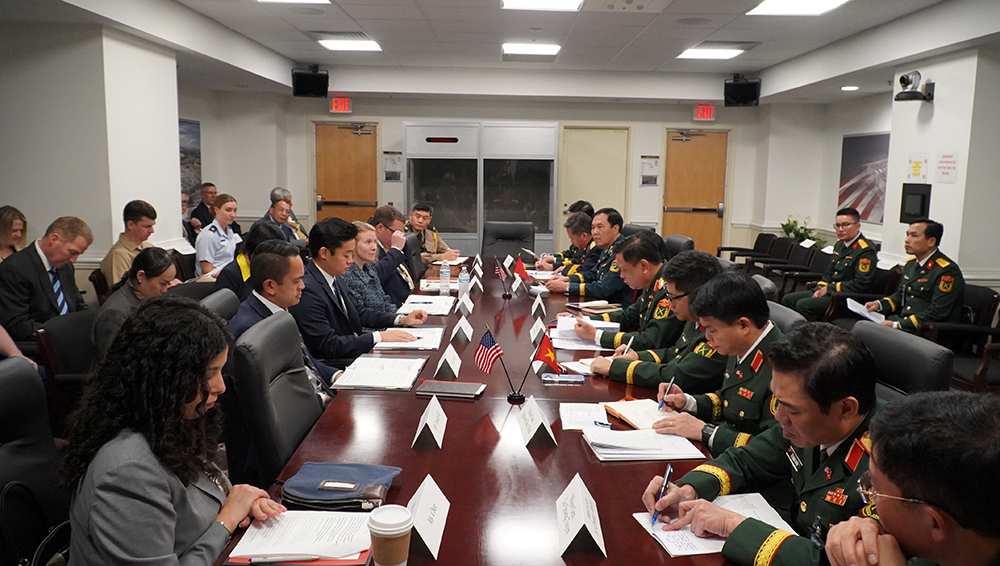
Deputy Minister of National Defense Nguyen Truong Thang and Assistant Secretary for Indo-Pacific Security Affairs John Noh co-chaired the 14th Viet Nam-U.S. Defense Policy Dialogue in Washington DC, on November 5.
07 November,2026