Manila,September 14 (AseanAll) — Philippine President Ferdinand R. Marcos Jr. thanked Indian Prime Minister Narendra Modi and the people of India for their hospitality during the 18th BRICS Summit as the President looked forward to welcoming Modi to Manila in November and building on the growing economic and strategic partnership between the two countries.
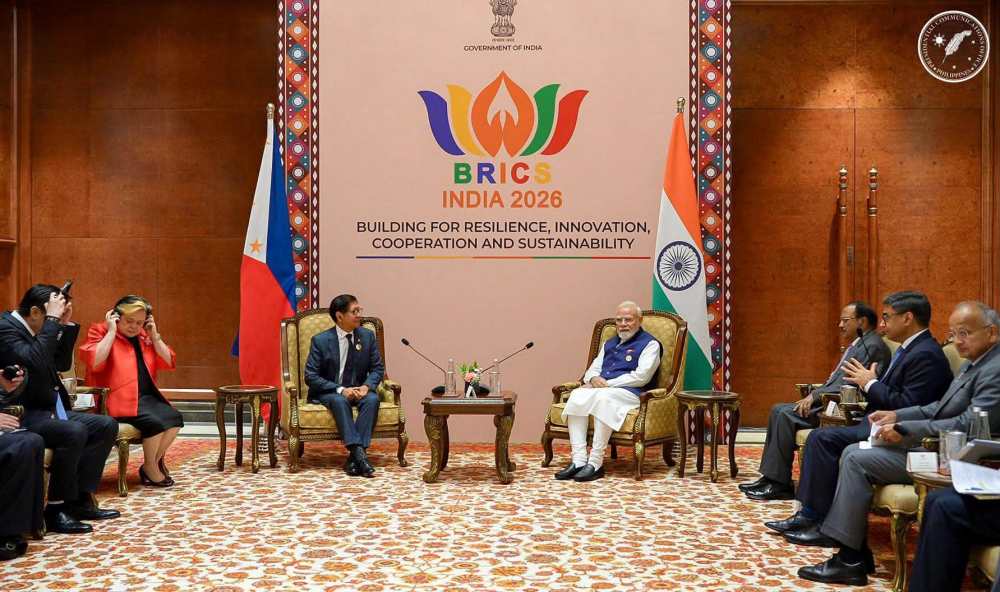
“I thank Prime Minister Modi and the Government and people of India once again for their friendship and hospitality. I look forward to receiving Prime Minister Modi in Manila this November,” Marcos said in a post-visit statement on September 14, 2026.
The President said the New Delhi engagements provided fresh momentum for the Philippines and India to translate their Partnership Declaration into concrete programs and results in science and technology, digital cooperation, artificial intelligence, financial technology, creative industries, health and pharmaceuticals, railway development and space cooperation.
Marcos and Modi also discussed regional stability, economic security and the future of the Indo-Pacific, with both governments looking toward joint and committed action in addressing common challenges.
Another area for future cooperation is disaster resilience following the Philippines’ decision to join the Coalition for Disaster Resilient Infrastructure (CDRI), an India-led initiative aimed at strengthening critical infrastructure against increasingly complex climate and disaster risks.
Marcos said CDRI membership would benefit the Philippines because the coalition’s objectives closely align with the administration’s climate change programs.
Beyond government-to-government cooperation, the President said the Philippines is seeking to build on the visit by turning discussions with leading Indian companies into investments and projects in key growth sectors.
During high-level business engagements, President Marcos highlighted opportunities in digital technology, airport infrastructure, digital payment systems, IT-BPO services and advanced electronics manufacturing.
The President also positioned the Philippines as a prime Southeast Asian investment destination supported by its dynamic digital economy, skilled workforce and economic reforms aimed at attracting high-value and technology-driven investments.
Among the major projects discussed was GMR Group’s partnership with Cavitex Holdings Inc. for the development of Sangley Point International Airport, which is expected to attract direct investment and help ease congestion at the Ninoy Aquino International Airport.
iSON Group also reaffirmed its earlier commitment to invest up to US$300 million over 10 years to expand its telecommunications tower network while outlining potential investments in renewable energy, agro-technology, digital healthcare and business process outsourcing.
Discussions with NPCI International focused on a proposed partnership with the Land Bank of the Philippines to modernize the country’s real-time payment infrastructure and explore interoperability between India’s Unified Payments Interface and QR PH for seamless cross-border transactions.
President Marcos also held an executive roundtable with top officials of HCLTech, Cognizant, Hinduja Group and VVDN Technologies to explore investments in IT services, AI-driven operations, customer experience management and advanced electronics design and manufacturing.
“These engagements reaffirm the strong confidence of Indian business leaders in the Philippine economy and support our vision of establishing the country as a competitive, innovation-driven, and future-ready investment destination,” the President said.
The expected Manila visit of Prime Minister Modi in November provides the two governments another opportunity to sustain the momentum generated in New Delhi and advance agreements and initiatives toward implementation.
Marcos said participation in the BRICS Summit also gave the Philippine delegation a clearer understanding of the changing global landscape and where the Philippines and ASEAN must position themselves amid emerging economic and geopolitical challenges.
The administration will now seek to convert the understandings reached in New Delhi into concrete action, investments and economic opportunities that would directly benefit Filipinos.
“Our task now is to turn that understanding into action to widen our economic opportunities and to ensure that the changes taking place around us ultimately work to the advantage of our people,” Marcos said.