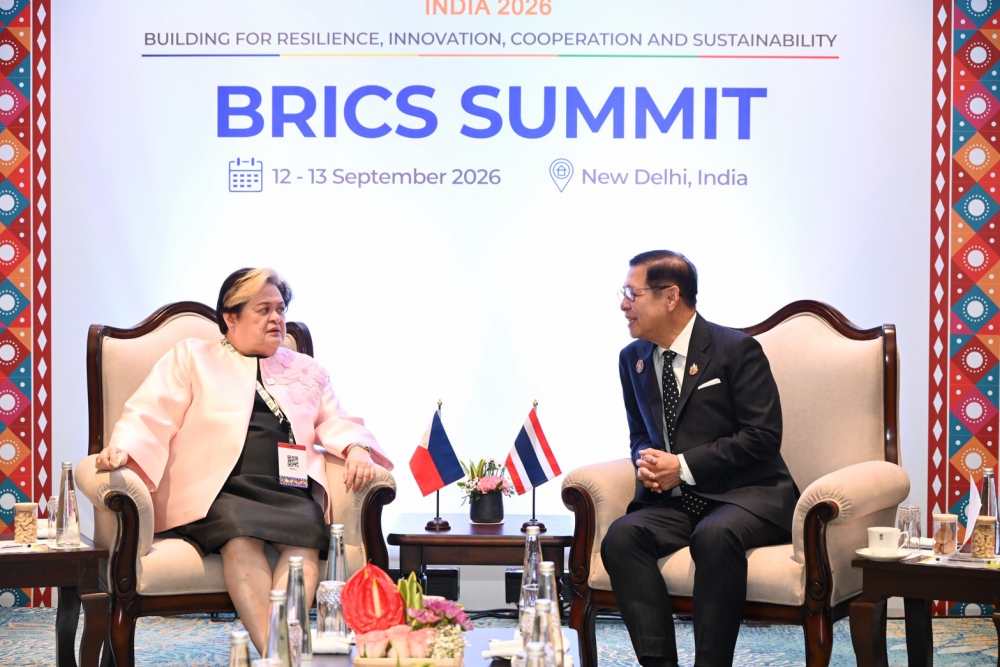
New Delhi, September 13 (AseanAll) — Philippine President Ferdinand R. Marcos Jr. on September 13, 2026 highlighted the Association of Southeast Asian Nations’ (ASEAN) priorities on peace and security, economic prosperity, and people empowerment as he addressed world leaders at the Open Session of the 18th BRICS Summit in New Delhi, India.
Representing the 11-member ASEAN as its Chair for 2026, President Marcos attended the session at the Bharat Mandapam Convention Center upon the invitation of Indian Prime Minister Narendra Modi, whose country holds this year’s BRICS Chairship.
“Today, I represent 11 dynamic nations and nearly 700 million people. We, in ASEAN, stand as an open, inclusive, and outward-looking community,” Marcos said in his intervention before the world leaders.
Marcos addressed the session with the Philippines participating as an “Outreach Country,” an invited non-member that may take part in the summit’s Outreach/BRICS Plus discussions without becoming a BRICS member or partner country.
The President presented the Philippines’ ASEAN Chairship theme, “Navigating Our Future, Together,” and outlined its three core priorities: Peace and Security Anchors, Prosperity Corridors, and People Empowerment.
On peace and security, Marcos stressed that regional and global stability depends on ASEAN centrality, sustained dialogue, and adherence to a rules-based order anchored in international law.
The President said ASEAN is advancing cooperation on maritime issues, disaster preparedness, and climate security as the region responds to emerging threats and external geopolitical and economic shocks.
“Through these anchors, ASEAN is fostering the practical cooperation and resilience required to weather external geopolitical and economic shocks,” the President said.
On economic prosperity, Marcos said ASEAN is strengthening regional connections to achieve sustainable and inclusive growth while improving supply chain, energy, and food security.
“We are advancing clean energy transitions through the ASEAN Common Shared Power Grid, reinforcing regional energy resilience under the ASEAN Petroleum Security Agreement and safeguarding essential staples through regional rice reserve mechanisms,” the President said.
Marcos also highlighted ASEAN’s efforts to accelerate the landmark Digital Economy Framework Agreement (DEFA) under the Philippine Chairship and promote the safe and ethical adoption of artificial intelligence, particularly among micro, small and medium enterprises and women-led enterprises.
The President added that ASEAN is also developing green investment pipelines and pursuing a common regional plan for climate-ready and food-secure agriculture to promote long-term sustainability and green growth.
On people empowerment, Marcos stressed that ASEAN’s development agenda must remain centered on its people.
“To this end, we are investing in smart youth, in digital literacy, and resilient families while safeguarding vulnerable groups to build deep, enduring social resilience,” the President said.
“ASEAN’s enduring strength lies in consensus, bridge building, and constructive engagement across regions. By anchoring peace and stability, expanding prosperity corridors, and empowering our people, we turn shared aspirations into tangible realities,” Marcos added.
As ASEAN Chair and Country Coordinator for ASEAN-India Dialogue Relations, President Marcos also congratulated Prime Minister Modi and India on its successful BRICS Chairship.
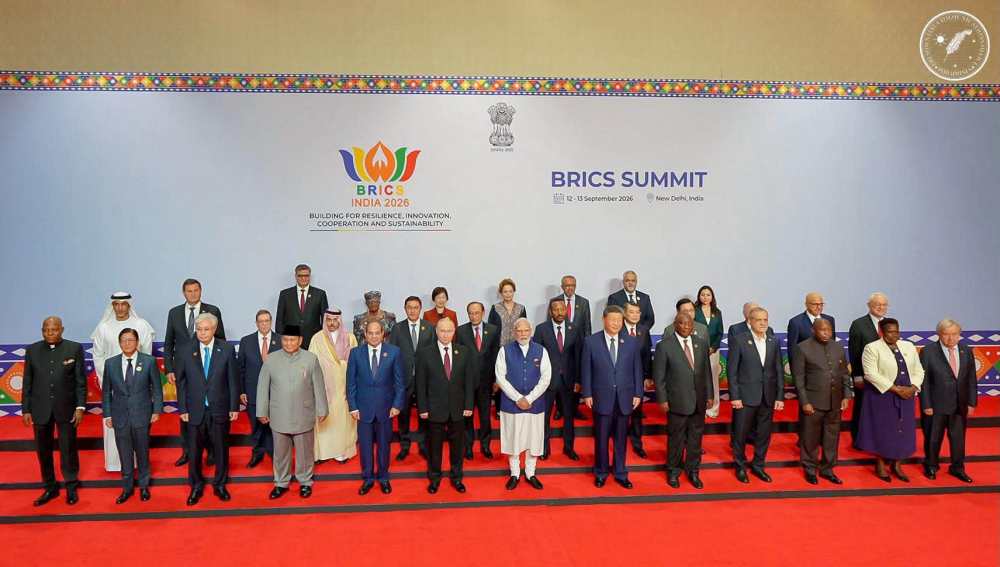
Prior to the Open Session, Marcos joined other world leaders attending the summit, such as Chinese President Xi Jinping and Russian President Vladimir Putin, for the family photo.
On the evening of September 12, Marcos and First Lady Louise Araneta-Marcos attended the Gala Dinner hosted by Prime Minister Modi for visiting heads of state and their delegations also at Bharat Mandapam.
The 18th BRICS Summit is being held in New Delhi on September 12 and 13 under the theme “Building for Resilience, Innovation, Cooperation and Sustainability.”
India is hosting the BRICS Summit for the fourth time, following its hosting in 2012, 2016 and 2021.
BRICS began as a grouping of Brazil, Russia, India, China and later South Africa and has since expanded to 11 members. The grouping serves as a platform for emerging economies and developing countries to cooperate on political and security issues, economic and financial matters, and people-to-people exchanges. |