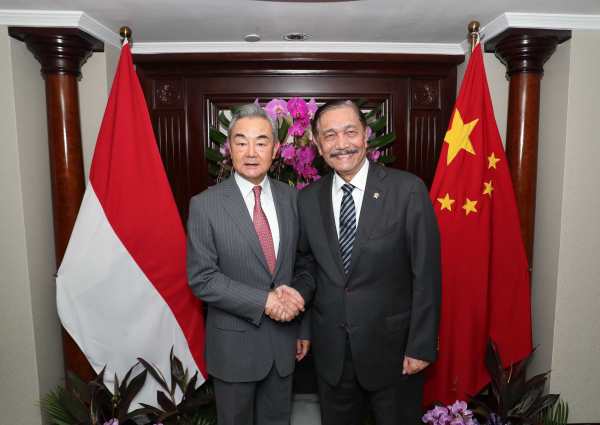
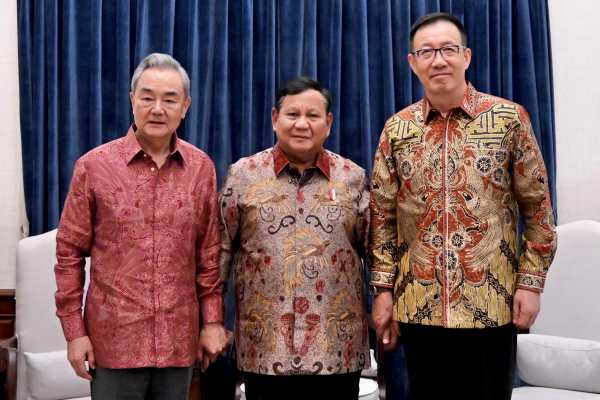
(AseanAll) — On the occasion of the 10th anniversary of the launch of the first Lancang-Mekong Cooperation (LMC) Leaders' Meeting, on March 16th and 17th,2026, Chinese Ambassador to Myanmar Ma Jia published a signed article titled " Shared River, Shared Vision" in Myanmar's official media, including The Global New Light of Myanmar, Myanma Alinn, Myawaddy, and The Mirror respectively.
The following is the full text of the article:
Originating on the Qinghai-Xizang Plateau in China, the Lancang-Mekong River runs through Myanmar, Laos, Thailand, Cambodia, and Vietnam. Stretching for more than 4,000 kilometers through rugged mountains and valleys, it nourishes hundreds of millions of people across its basin and closely links China with the five Mekong countries. On March 23rd, 2016, the first Lancang-Mekong Cooperation (LMC) Leaders’ Meeting was held in Sanya, Hainan, marking the launch of the LMC. Over the past decade, the LMC has transformed from a visionary blueprint into concrete actions, and from institutional foundations into comprehensive development, becoming one of the most vibrant and promising cooperation mechanisms in the region.
Over the past decade, the Lancang-Mekong countries have written a brilliant new chapter in building a community with a shared future. The six countries have earnestly implemented the important consensus reached by their leaders, constantly strengthened top-level design and institutional development, and effectively carried out the two Five-Year Plans of Action. Strategic trust between China and the five Mekong countries has grown steadily. China has successively formed a community with a shared future with Laos, Cambodia, Myanmar, Thailand, and Vietnam. Solid progress has been made in building the Lancang-Mekong community with a shared future. The LMC has gradually grown into a benchmark for South-South cooperation, bringing tangible benefits to the people of the six countries and making significant contributions to long-term development and shared prosperity in the region.
Over the past decade, a new landscape of all-round, multi-level, and wide-ranging cooperation has been shaped for the LMC. Upholding the spirit of partnership, the six countries have jointly established a three-dimensional cooperation structure comprising the Leaders’ Meeting, Foreign Ministers’ Meeting, Senior Officials’ Meeting, and Joint Working Group Meeting. The foreign ministries of the six countries have all set up LMC National Secretariats or Coordinating Units, advancing all-round cooperation and broad participation across the countries. Practical cooperation has been deepened in the three major pillars (political and security issues, economic and sustainable development, and cultural and people-to-people exchanges) and in the five key priority areas (connectivity, production capacity, cross-border economic cooperation, water resources, and agriculture and poverty reduction). Several institutions have been established and put into operation, including the Lancang-Mekong Water Resources Cooperation Center, Environmental Cooperation Center, Agricultural Cooperation Center, Youth Exchange Cooperation Center, Integrated Law Enforcement and Security Cooperation Center, and Global Center for Mekong River Studies. This has created the Lancang-Mekong speed featuring progress and results delivered daily, monthly and annually.
Over the past decade, noteworthy achievements have been delivered in building the Lancang-Mekong Economic Development Belt. In 2025, trade volume between China and the five Mekong countries reached a record high of 500.9 billion U.S. dollars, representing an increase more than 150 percent compared to a decade ago. China has remained the largest trading partner of Cambodia, Myanmar, Thailand, and Vietnam for many consecutive years, and the second largest trading partner of Laos. The China-Myanmar Oil and Gas Pipelines have been operating smoothly, and the China-Laos railway continues to function as a golden corridor. Numerous projects between China and Cambodia, Thailand, and Vietnam have been successfully implemented in areas such as infrastructure connectivity, sustainable agricultural development, and artificial intelligence. With high-level flows of capital, goods, and technology among the six countries, industrial and supply chain cooperation has deepened, fostering new economic models, nurturing new growth drivers, and revitalizing the Lancang-Mekong region in the new era.
Over the past decade, people-to-people exchanges among the Lancang-Mekong countries have ushered in a new phase of mutual understanding, affinity, and harmonious coexistence. Facilitated by the “Lancang-Mekong visa” policy, exchanges between our peoples have become more frequent. Exchange events such as art festivals, photography exhibitions, and film weeks have further strengthened the bonds of friendship among our peoples. The 991 “small yet smart” projects supported by the LMC Special Fund have been implemented. Among these, the “Lancang-Mekong Sweet Spring Action” has established 110 water supply demonstration projects, benefiting about 13,000 people in Cambodia, Laos, and Myanmar. The “LMC Bumper Harvest Projects” have helped tens of thousands of local farming households increase production and income in sectors such as coffee, rubber, fruit, sericulture, and aquatic products. The “Lancang-Mekong Bright Project” has restored sight to tens of thousands of cataract patients. Meanwhile, the six countries have joined hands in responding to natural disasters and the COVID-19 pandemic, deepened cooperation on law enforcement and security, and safeguarded the lives and health of our people and the tranquility of the region.
Myanmar is where the LMC was first proposed. It is also an active participant and a key beneficiary of the LMC. A total of 132 projects supported by the LMC Special Fund have successively yielded fruitful results in Myanmar, spanning a wide range of areas including agricultural development, ecological protection, scientific and technological innovation, cultural tourism, and trade and investment. These achievements demonstrate the strong dynamism of the LMC in Myanmar. The projects include building poverty alleviation model villages to help the people in Myanmar shake off poverty and live a better life; implementing solar micro-grid projects to provide round-the-clock electricity to thousands of households in remote areas; and improving the quality of aquatic products to ensure they are safer and of higher quality, serving as the stock for Mohinga, a traditional Myanmar delicacy. Last August, I attended the completion ceremony of the solar mini-grid electricity supply and water supply distribution system project held in Kan Seik Village, Dedaye Township, Ayeyarwady. During the event, local villagers voiced their excitement, “We had never dreamed that we could have access to electricity and clean water.” These practical outcomes and touching moments not only reflect the profound China-Myanmar “Pauk-Phaw” friendship but stand as the most compelling testament to the steady progress of the LMC.
Over the past decade, the practices of China-Myanmar cooperation under the LMC framework have demonstrated why the LMC is widely welcomed and recognized by countries and peoples in the region. The key lies in the fact that it has always promoted the LMC culture featuring “equality, sincerity, mutual assistance and kinship,” upheld the LMC spirit of “development first, equal consultation, pragmatism and efficiency, and openness and inclusiveness,” and taken it as its mission to benefit the peoples of the six countries. This aligns closely with the shared aspiration of regional countries for peace, development, and cooperation.
The world today is undergoing an accelerated transformation unseen in a century. Wars and conflicts occur frequently, and the law of the jungle and unilateralism have been rampant. In the face of the turbulent and changing international landscape, the six LMC countries will speak up for peace and empower development. They will build an “LMC 2.0” characterized by unity and cooperation, openness and win-win outcomes, green innovation, and peace and tranquility, jointly opening a new golden decade of the LMC.
At present, China is building a great modern socialist country in all respects and advancing the great rejuvenation of the Chinese nation on all fronts through Chinese modernization. As a Chinese saying goes, “One flower blooming alone does not herald spring, but hundreds of flowers bring spring to the garden.” The modernization we are pursuing is not for China alone, but for all countries, including other developing countries, through our joint efforts. As the world’s most important force for peace, for stability and for justice, China will always be a good neighbor, a good friend, and a good partner of the Mekong countries. We will jointly advocate for an equal and orderly multipolar world and a universally beneficial and inclusive economic globalization, work toward the overarching goal of building a Lancang-Mekong community with a shared future, and promote higher-quality and higher-level development across the Lancang-Mekong region on the path to modernization.