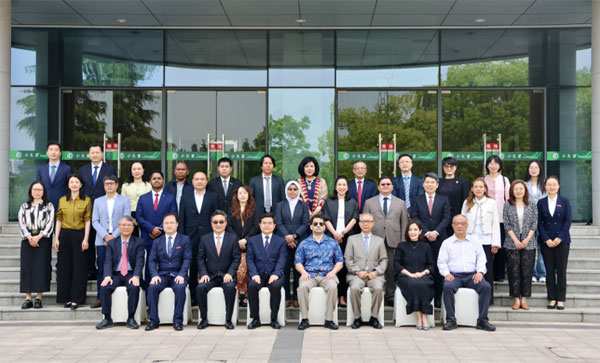
Zhenjiang, May 15 (AseanAll) — On 13 May 2026, the ASEAN-China Centre (ACC) organized the Seminar on the ISEAS-Yusof Ishak Institute’s State of Southeast Asia 2026 Survey Report at Jiangsu University in Zhenjiang, Jiangsu province, China. The Seminar discussed the key findings of the Survey report, especially regarding the development of ASEAN-China relations, and provided recommendations on jointly addressing the global energy crisis. The Seminar was participated in by scholars from Cambodia, China, Indonesia, the Lao PDR, Malaysia, the Philippines, Singapore, Thailand and Vietnam. Maubere Lorosae da Silva Horta, Ambassador of Timor-Leste to China, Consul-General of Thailand in Shanghai, and representatives from various Consulates General of ASEAN Member States (AMS) in Shanghai were also present at the Seminar.
The representative from the ISEAS-Yusof Ishak Institute, Ms. Joanne Lin, presented key findings of the State of Southeast Asia 2026 Survey Report, providing a systematic interpretation and analysis of the current status and trends of Southeast Asian countries’ attitudes towards major economies within and outside the region. She noted that this year’s report, for the first time, reflects a shift in the region’s strategic choice towards China over another major power. Respondents generally expressed deep concerns over geopolitical conflicts, global trade shifts, and energy security challenges. They hoped to replace strategic balancing acts with greater resilience when navigating external changes, and to safeguard regional energy security and achieve common prosperity through strengthening strategic autonomy and deepening regional cooperation.
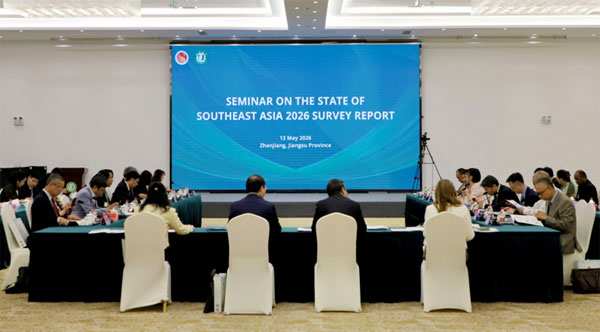
ASEAN and Chinese scholars shared the view that trade protectionism has disrupted the global economic and trade order as well as the stability of industrial and supply chains, adding downward pressure on the global economy. The lack of coherence and stability in such policy runs counter to the trend of regional collaborative development, and is detrimental to the long-term development of the region. ASEAN scholars viewed the recent interactions between the heads of state of China and the U.S. positively, believing that such moves help both sides manage differences and create a favorable external environment for regional development. China’s positive contributions to regional development are fully recognized and appreciated especially in improving infrastructure and driving regional economic growth in ASEAN countries. They expressed that ASEAN countries look forward to continuously enhancing political mutual trust with China, tapping into the potential of cooperation in trade, investment, and emerging industries, and particularly strengthening clean energy cooperation to jointly safeguard regional energy security and promote the steady and sustained growth of the ASEAN-China Comprehensive Strategic Partnership (CSP).
Shi Zhongjun, Secretary General of the ACC, stated that the current international situation is complex and volatile, marked by intensifying geopolitical competition and prominent global energy security challenges. As the year 2026 marks the 35th anniversary of ASEAN-China dialogue relations and the 5th anniversary of the ASEAN-China CSP, the bilateral cooperation stands at a new historical starting point. ASEAN and China should further consolidate strategic consensus, firmly uphold ASEAN’s centrality, and adhere to multilateralism and open regionalism; deepen cooperation in trade, green energy, digital economy, and industrial and supply chains, while strengthening people-to-people exchanges; and safeguard regional peace, stability, development, and prosperity, contributing to a closer ASEAN-China community with a shared future, and injecting more certainty into global South-South cooperation and sustainable world development.
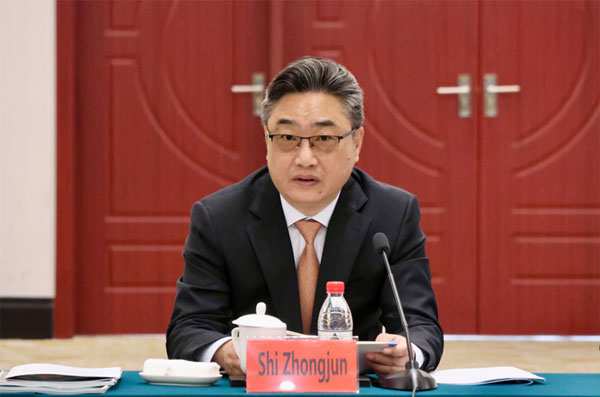
Prior to the Seminar, Shi Zhongjun met with Mr. Li Hongbo, Secretary of the CPC Committee of Jiangsu University and discussed cooperation on future activities. During the Seminar, SG Shi and ASEAN delegates also held cordial exchanges with ASEAN students who are studying at Jiangsu University.
On 12 May, Shi Zhongjun attended the collective meeting between Mr. Wu Qingwen, Secretary of the CPC Zhenjiang Municipal Committee, and Maubere Lorosae da Silva Horta, Ambassador of the Democratic Republic of Timor-Leste to China, alongside some representatives from the AMS Consulates General in Shanghai. Shi also participated in the China (Zhenjiang)-ASEAN Economic and Trade Cooperation Matchmaking Conference, where in-depth views were exchanged on deepening cooperation between ASEAN countries and Zhenjiang city in fields such as trade and investment, industrial collaboration, and people-to-people exchanges, with a view to further expanding practical cooperation between AMS countries and Zhenjiang.