Bangkok, July 7 (AseanAll) — On July 7, 2026, at the Avani Plus Riverside Hotel, Bangkok, Thai Deputy Government Spokesperson Lalida Persvivatana disclosed that Thai Prime Minister and Minister of Interior Anutin Charnvirakul presided over and delivered a special address at the 3rd APEC Business Advisory Council (ABAC3/2026).
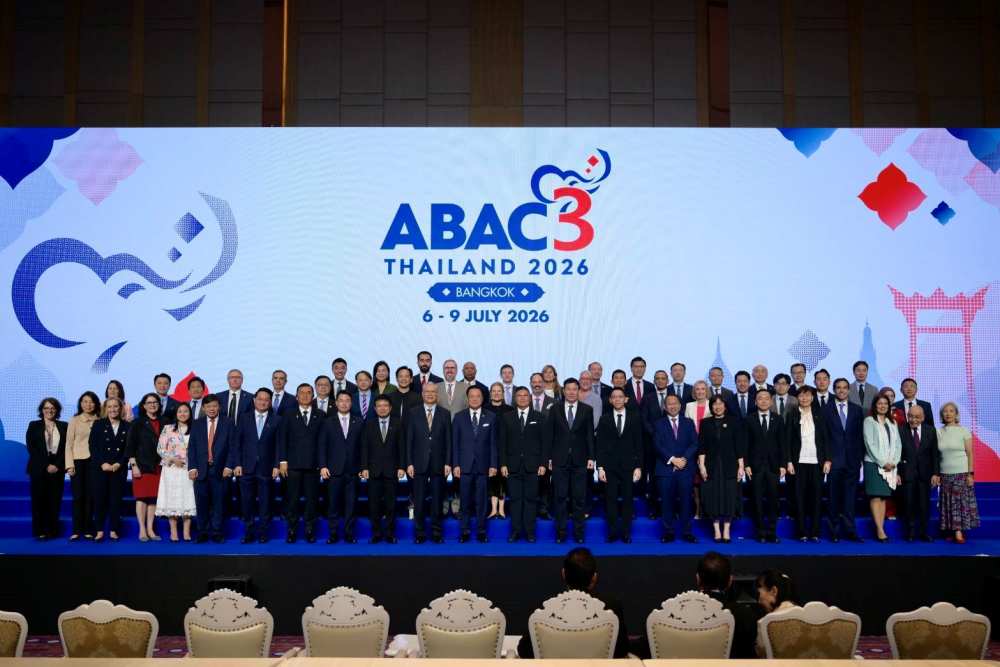
The Prime Minister welcomed all participants to Bangkok. Since every meeting of the APEC Business Advisory Council produces recommendations, many of which eventually shape regional policy, ABAC remains one of the most valuable institutions in APEC, not because it represents business, but because it brings reality into the policy conversation. Businesses are much better at telling Governments what actually works. There is no substitute for that experience.
Thailand have also been trying to embrace the same philosophy. Over the past months, the Thai Government has invited CEOs and business leaders to the Government House for working conversations, sometimes simply to ask one simple question: “What is making it harder for you to invest, expand, or create jobs?” Many times, the answer is not another incentive. It is just removing an obstacle.
Today’s business environment is becoming more complex. Geopolitical uncertainty continues to affect decisions that businesses make. These challenges cannot be solved by Governments acting alone, nor can businesses solve them without Governments creating the right environment. That is why partnership matters.
For Thailand, the priority is clearly to make the country to become a place where good investments move quickly. That is the thinking behind Thailand FastPass. Its purpose is straightforward: to reduce unnecessary procedures, improve coordination across government agencies, and give investors with high-quality investment projects a faster and more predictable pathway from proposal to implementation. Because investors should spend their time building businesses, not navigating bureaucracy.
At the regional level, the same principle applies. The resilience of Thai supply chains depends not only on infrastructure, but also on trust. It depends on predictable rules, transparent regulations, reliable logistics, and partners who keep markets open even in difficult times.
APEC should continue strengthening regional supply chains. Not by creating competing blocs, but by making APEC economies more connected, more diversified, and more resilient together. This is also why Thailand continues to support high-quality Free Trade Agreements. Long-term investment requires confidence. Confidence comes from clear rules, fair competition, and easier market access. FTAs are not simply legal documents. They provide businesses with greater certainty when making decisions about where to invest, where to produce, and where to grow.
One of the strengths of APEC has always been its ability to connect public policy with practical business experience. That connection has never been more important. That is why voice of businesses matters. And that is why Governments must continue listening. Thailand looks forward to receiving ABAC’s recommendations and, more importantly, turning the recommendations into practical action. Because ultimately, the shared objective is to make it easier for businesses to invest, easier for trade to grow, and easier for the people to benefit from a stronger and more connected Asia-Pacific.