At the invitation of the Government of Japan, His Excellency Ferdinand Romualdez Marcos, Jr., President of the Republic of the Philippines, undertook a State Visit to Japan from May 26 to 29, 2026. On May 28, 2026, President Marcos and Her Excellency Prime Minister Takaichi Sanae held a summit meeting in Tokyo, and warmly celebrated the 70th anniversary of the normalization of diplomatic relations between the Republic of the Philippines and Japan.
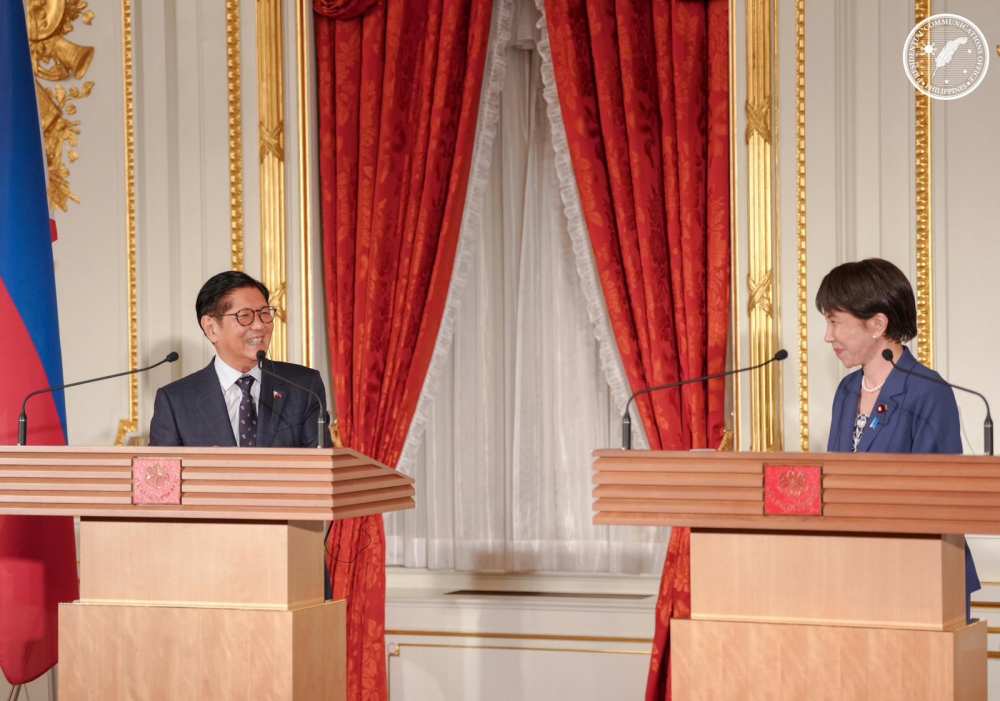
1. The two leaders recalled with appreciation the long-standing and close friendship between the Philippines and Japan, nurtured through decades of broad and fruitful cooperation and people-to-people exchanges, and reaffirmed their shared commitment to further deepening this relationship for the benefit of both nations and the wider region.
2. The two leaders noted that since its establishment in 2011, the Philippines-Japan Strategic Partnership has made remarkable progress in both depth and scope. The two leaders also shared the strategic outlook that, amid the increasingly severe international security environment across a wide range of concerns, close and strengthened cooperation between the Philippines and Japan has become even more important than ever before. They shared the view that the Philippines and Japan, as like-minded maritime democracies, have entered a platinum era of relations and have become one of the closest of like-minded countries, characterized by unprecedented levels of trust, cooperation, and strategic alignment. Against this backdrop and shared recognition, the two leaders decided to elevate bilateral relations to the Comprehensive Strategic Partnership, which places the friendship at a much higher tier than before.
3. The two leaders reaffirmed the importance of realizing a Free and Open Indo-Pacific (FOIP) and the ASEAN Outlook on Indo-Pacific (AOIP), and reaffirmed that both the FOIP and the AOIP share relevant fundamental principles in promoting an open, transparent, resilient, inclusive and rules-based regional architecture that upholds international law, underpinned by freedom of navigation and overflight, peaceful settlement of disputes, and respect for sovereignty, sovereign rights, and territorial integrity. Amid geopolitical and geostrategic shifts, they reiterated the importance of enhancing both countries’ resilience and promoting their freedom to decide for themselves across economic, social and security-domains. President Marcos welcomed Japan’s resolve to play an even more proactive role than ever before in fulfilling its responsibilities and contributing to the building of an international order based on the rule of law under the updated FOIP. They confirmed that the Philippines and Japan will continue to work closely together, as well as with partners sharing these values by strengthening cooperation and advancing concrete collaborative initiative, to promote peace, stability, freedom and prosperity in the Indo-Pacific region and beyond, thereby promoting the realization of FOIP.
Security Cooperation
4.The two leaders welcomed the entry into force of the Philippines-Japan Reciprocal Access Agreement (RAA) on 11 September 2025, which enhanced the efficiency of cooperation and exchanges between the Armed Forces of the Philippines (AFP) and the Self-Defense Forces of Japan (JSDF). They welcomed that the RAA has been applied to multiple exercises already, following its entry into force. They also welcomed the signing of the Philippines-Japan Acquisition and Cross-Servicing Agreement (ACSA) on 15 January 2026 and the close coordination for its entry into force at the earliest possible timing. Furthermore, the two leaders decided to commence negotiations on an agreement on the protection of classified military information, recognizing the importance of such a framework in further deepening bilateral security and defense cooperation, as well as promoting interoperability between the two countries and with other partners.
5.Prime Minister Takaichi reaffirmed Japan’s commitment to contributing to the capacity building of the AFP, especially in the maritime area. The two leaders decided to continue closely working together to further promote the transfer of defense equipment, including destroyers, TC-90 and radar systems, with the Agreement concerning the Transfer of Defense Equipment and Technology and the Official Security Assistance (OSA) in mind. They also looked forward to advancing defense industry collaboration, noting that this would support the development of mutually beneficial industrial capabilities, enhance supply chain resilience, and contribute to interoperability and long-term defense readiness. In this context, the Philippines welcomed Japan’s newly revised Three Principles on Transfer of Defense Equipment and Technology as well as its Implementation Guidelines, and they confirmed that these efforts also contribute to regional peace and stability.
6.Recognizing their shared strategic interests, the two leaders welcomed the significant deepening of cooperation between their defense authorities in recent years, which has laid a robust foundation for their bilateral partnership. To further enhance strategic coordination and ensure effective high-level policy discussions, they also decided on the early convening of the next Philippines-Japan ‘2+2′ (Foreign and Defense Ministerial Meeting).
Economic Cooperation
7. The two leaders recognized that strengthening infrastructure connectivity and resilience in the Philippines through Japan’s Official Development Assistance (ODA) is essential for not only the economic growth of the Philippines but also regional stability. Both leaders emphasized the importance of advancing projects in areas such as high-quality infrastructure development, disaster risk reduction, digitalization, agricultural and rural development, and healthcare, which contributes to Asia Health and Wellbeing Initiative, as well as promoting investments in high-impact infrastructure projects including rail, ports modernization, clean energy and semiconductor supply chains and deployments, digital connectivity, agribusiness and civilian port upgrades under the Luzon Economic Corridor (LEC) initiative in close cooperation with partner countries. They also reaffirmed their strong commitment to transforming the LEC into a world-class economic hub that strengthens global supply chains, accelerates economic development, and delivers mutual economic prosperity, recognizing the LEC’s importance to regional economic architecture and supply chain resilience. Japan reaffirmed its commitment to continue supporting high-quality, resilient, and sustainable infrastructure development for achieving economic and social transformation, through the next stage of the Philippines’ development, for a prosperous, inclusive, and resilient society.
8.The two leaders, while appreciating the strengthening of Philippines-Japan business relations, recognized the importance of further improving the business environment and reaffirmed the importance of upholding a free and open, and rules-based trade framework. From this perspective, the two leaders acknowledged that the Philippines-Japan Economic Partnership Agreement (PJEPA), the ASEAN-Japan Comprehensive Economic Partnership (AJCEP) Agreement and the Regional Comprehensive Economic Partnership (RCEP) Agreement, have promoted the liberalization of trade and investment between the two countries. They decided to work together towards the full and effective implementation and utilization of those Agreements to promote greater bilateral and regional trade and investments, foster innovation, and create growth opportunities. In this regard, they acknowledged the importance of the review provisions in these Agreements. They also acknowledged that at the Ninth Commission Meeting of the Comprehensive and Progressive Agreement for Trans-Pacific Partnership (CPTPP), the Philippines has been identified as one of the aspirants in line with the Auckland Principles, with a possible commencement of its accession process in 2026, if appropriate. The Philippines reaffirmed its intent to further engage with Parties to facilitate commencement of this process at the soonest opportunity this year, and Japan welcomed the Philippines’ firm commitment to upholding the high standards of the CPTPP and expressed its support for the early commencement of the accession process. They also welcomed the signing of the Convention between Japan and the Republic of the Philippines for the Elimination of Double Taxation with respect to Taxes on Income and the Prevention of Tax Evasion and Avoidance, which will replace the existing Tax Convention. The two leaders expressed their expectation to promote further mutual investments and economic exchanges between the two countries.
9.The two leaders shared the view to strengthen cooperation in the field of economic security. They expressed concerns over all forms of economic coercion and non-market policies and practices, as well as the export and import restrictions that could have a significant negative impact on global supply chains. The two leaders decided to deepen cooperation on strengthening supply chain resilience, including through the development of critical minerals industry, semiconductors and electronics, renewable energy and automotive, among others, and to promote transparent, diversified, secure, sustainable, trustworthy and reliable supply chains among trusted partners. The two leaders also decided to deepen cooperation in strategically important and advanced technologies such as artificial intelligence (AI), including its ethical development and application, and secure networks, while working towards reducing excessive dependencies. To this end, they decided to work together to enhance their AI national capabilities and to build a safe, secure, and trustworthy AI ecosystem through the Japan-ASEAN Co-creation Initiative for AI, including by promoting the development of AI models reflecting Asia’s diverse languages and cultures. They also shared the view to cooperate on digital infrastructure including undersea cables and 5G Open RAN in line with the “FOIP Digital Corridor Concept”. The two leaders also encouraged the active participation of Japanese companies in the development of the Philippine manufacturing supply chain and industrial ecosystem such as the automotive and semiconductors industry, recognizing their importance in strengthening supply chain resilience, promoting industrial upgrading, and fostering mutually beneficial economic growth.
10.They also reaffirmed their intention to deepen various cooperation under the “POWERR Asia” (Partnership On Wide Energy and Resources Resilience Asia). In this context, they decided to strengthen the resilience of the supply chain for critical goods, and that Japan will provide support for development of the Philippines’ national oil reserve system and ASEAN’s joint oil stockpiling arrangement, and confirmed that it is beneficial for both countries to mitigate the impact of disruptions to global energy supply and demand, as well as geopolitical risks stemming from the situation in the Middle East.
11. The two leaders decided on the importance of addressing climate change, promoting economic growth, and energy security while ensuring stable energy supply and promoting clean energy. They reaffirmed their commitment to advancing cooperation under the Asia Zero Emission Community (AZEC), incorporating the perspective of energy resilience, while taking into account the diverse circumstances of the region. They also confirmed that this cooperation would include a broad range of energy options, including, subject to progress on the Philippines side, advancing cooperation in the field of civilian nuclear energy, liquefied natural gas (LNG), and offshore wind power. In light of the important role of the Philippines as this year’s ASEAN Chair, the two leaders decided to co-host the AZEC Summit later this year.
12. The two leaders shared the view that development and cooperation harnessing technological innovation are essential to sustainable prosperity, and also decided to deepen cooperation in the fields of space and digital transformation (DX) towards attaining food security. From this perspective, the two leaders decided to promote support for improving productivity in the Philippines’ agricultural and fisheries sector, as provided under the Memorandum of Cooperation between the Department of Agriculture of the Republic of the Philippines on Agricultural Cooperation and the Ministry of Agriculture, Forestry and Fisheries of Japan, signed this time.
Maritime Cooperation
13.The Philippines and Japan, as neighbors connected by the sea, reaffirmed the need to further promote peace, stability, and mutual trust through maritime cooperation underpinned by respect for international law. From this perspective, the two leaders decided to commence formal negotiations to delimit the maritime boundary of the exclusive economic zone and the continental shelf between the two countries, in accordance with international law, in particular the relevant provisions of the United Nations Convention on the Law of the Sea (UNCLOS) and guided by the relevant international jurisprudence, in order to enhance legal certainty in the region.
14.President Marcos also welcomed Japan’s continuous support for enhancing the capabilities of the Philippine Coast Guard, including through the provision of patrol ships. They decided to further promote mutual exchanges between the maritime law enforcement agencies, including through joint training and capacity-building activities, in order to ensure maritime safety and uphold the rule of law in the Indo-Pacific.
Other Bilateral Cooperation
15.Prime Minister Takaichi reaffirmed Japan’s unwavering commitment to the peace process in Mindanao, and welcomed recent developments toward the first-ever Bangsamoro Parliamentary Elections the date of which have been scheduled for the second Monday of September 2026. President Marcos expressed appreciation for Japan’s continued support for the peace process.
16.The two leaders decided to strengthen cooperation in developing peace mediation expertise and capacity, including the incorporation of the principles, objectives, and experience of the Women, Peace, and Security (WPS) agenda.
17.The two leaders welcomed the invigoration of people-to-people exchanges, including tourism, accompanying the closer relationship between the Philippines and Japan, and confirmed their continued cooperation toward promoting people-to-people exchanges between the two countries. The two leaders also welcomed the holding of the Fifth Consular Consultations between the Philippines and Japan in May 2026 to exchange views on further strengthening cooperation in the consular field between the two countries, and decided to hold the next consultation in the Philippines.
18. The Philippines recognized the Japanese government’s efforts to help the 2nd generation Nikkei-Jin for nationality acquisition and temporary return to Japan and will cooperate in facilitating the related procedures in the Philippines.
Coordination on Regional and International Issues
19.The two leaders reaffirmed the importance of further strengthening ASEAN-Japan cooperation in line with ASEAN Outlook on the Indo-Pacific (AOIP) and Free and Open Indo Pacific (FOIP) and recognized the continuing importance of ASEAN-led mechanisms and cooperation, including ASEAN Plus Three cooperation in strengthening regional resilience, sustainable growth and ASEAN-led regional architecture. Prime Minister Takaichi expressed Japan’s full support for the Philippines in its role as the ASEAN Chair and its leadership in advancing ASEAN’s efforts to promote peace, stability, sustainable development, and regional integration, as well as Japan’s unwavering support for the AOIP in support of ASEAN centrality and unity.
20.Regarding the situation on Myanmar, they reiterated that the Five-Point Consensus remains the main reference to address the political crisis in Myanmar and urged all parties concerned to take concrete action for the immediate cessation of violence, the facilitation of effective and comprehensive delivery of humanitarian assistance, and the fostering of a conducive environment for inclusive and constructive national dialogue. They welcomed the efforts of the Special Envoy of the ASEAN Chair in engaging stakeholders towards the implementation of the Five-Point Consensus.
21.The two leaders expressed serious concern over the situation in the East China Sea and the South China Sea, and reaffirmed their strong opposition to any unilateral attempts to change the peacefully established status quo by force or coercion. They emphasized the importance of upholding freedom of navigation and overflight, lawful uses of the sea, unimpeded commerce, and the peaceful resolution of maritime disputes in accordance with international law, particularly the UNCLOS. The two leaders reiterated their support for the 2016 South China Sea Arbitral Award, which is final and legally binding on the parties to the dispute. Noting that 10 years have passed since the issuance of the Award, the two leaders reaffirmed the importance of international law and compliance of the parties to the dispute with decisions and rulings duly-rendered through compulsory dispute settlement mechanisms under UNCLOS. They also reaffirmed the universal and unified character of UNCLOS as the comprehensive legal framework governing all activities in the oceans and seas. The two leaders acknowledged the importance of an effective and substantive Code of Conduct (COC) that is in accordance with international law, particularly UNCLOS, does not prejudice the legitimate rights and interests of all the actors using the South China Sea, and must effectively govern the behavior of parties at sea. The two leaders also emphasized the importance of peace and stability across the Taiwan Strait and encouraged a peaceful resolution of cross-Strait issues through dialogue.
22.The two leaders reaffirmed the importance of strengthening Philippines-Japan-United States cooperation for regional stability. The two leaders confirmed their intention to further enhance coordination with like-minded partners, such as Australia and India, in order to uphold a free and open international order based on the rule of law.
23.The two leaders discussed the situation in the Middle East. Regarding the situation surrounding Iran, they underscored the importance of securing free and safe navigation in the Strait of Hormuz and a stable energy supply chain. The two leaders reaffirmed that continued diplomatic efforts are indispensable to achieve an early de-escalation of the situation and lasting peace in the region. Regarding the situation in Palestine, the two leaders decided to contribute to peace-building efforts and to continue close coordination with the international community. The two leaders confirmed their intention to co-host the Ministerial Meeting of the Conference on Cooperation among East Asian countries for Palestinian Development (CEAPAD) in July in Manila on the sidelines of the ASEAN Ministerial Meetings and Related Meetings.
24.The two leaders decided to work together to advance triangular cooperation in the Global South, combining their two countries’ strengths, expertise, and capacity-building experience to support third partner countries in pursuing their development priorities.
25.The two leaders shared deep concern over North Korea’s nuclear and missile programs and malicious cyber activities, confirmed their commitment to the complete denuclearization of North Korea and reaffirmed the importance of resolving the abductions issue immediately.
26.The two leaders shared their principled views, as expressed in the United Nations Resolution No. ES-11/1 dated 2 March 2022, that the aggression by the Russian Federation against Ukraine is deplorable in the strongest terms, and highlighted the need to exert all efforts to de-escalate the situation and continue pursuing dialogue and diplomacy to settle disputes, maintain international peace and security, halt the growing number of civilian and military losses and casualties, and avert further humanitarian crisis.
27.Acknowledging the Philippines’ proactive role in promoting and contributing to peace, stability and development in the international fora including the United Nations, Prime Minister Takaichi affirmed Japan’s solid support for the Philippines’ bid for a non-permanent seat election, on the United Nations Security Council this year.
Closing
28. The two leaders confirmed their aim to expand and deepen the unwavering and enduring relationship of trust between the Philippines and Japan amid global uncertainty. The two leaders underscored their commitment tostrengthening and developing a sustainable and multi-layered partnership as Comprehensive Strategic Partners and like-minded nations that share fundamental values and principles and are prepared to meet present and future challenges and opportunities together.
General Secretary and President To Lam hosts an official welcome ceremony for King of Thailand Maha Vajiralongkorn Phra Vajiraklaochaoyuhua at the headquarters of the National Assembly, Ha Noi, September 15, 2026 – Photo: VGP
15 September,2026