JOINT STATEMENT OF THE ASEAN ECONOMIC COMMUNITY COUNCIL
ON THE ECONOMIC IMPLICATIONS OF THE SITUATION IN THE MIDDLE EAST
30 April 2026, Virtual
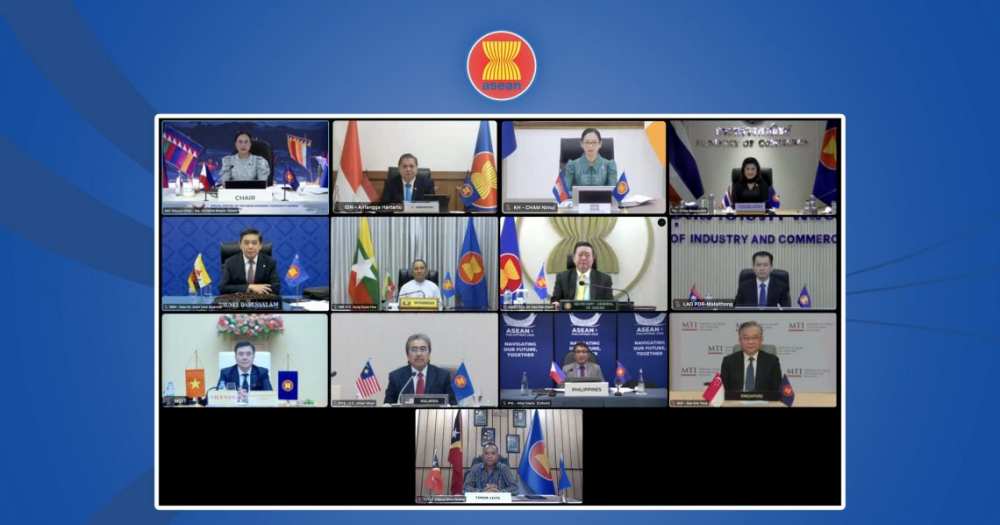
1. We, the ASEAN Economic Community Council (AECC) Ministers, convened a Special ASEAN Economic Community Council Meeting on 30 April 2026, via videoconference, to exchange views on the far-reaching economic implications arising from the situation in the Middle East and its escalating impacts on global energy markets, supply chains, food security, and transport and logistics networks. These developments are increasingly affecting our peoples and businesses across the region, particularly Micro, Small, and Medium Enterprises (MSMEs), and are expected to have significant implication on the region’s overall economic growth.
2. We expressed deep concern that the current disruptions to key maritime routes, particularly the Strait of Hormuz, where around one-quarter of global seaborne oil and liquefied natural gas (LNG) exports pass through, with over 80 per cent destined for Asia, are posing severe risks to global energy security, fuelling persistent volatility in oil and LNG prices, and sharply increasing freight, insurance, and logistics costs. We recognised that the impacts of these shocks are extending beyond energy markets to generate inflationary pressures, exchange rate volatility, tighter global financial conditions, and heightened uncertainty for businesses and investors. Recalling the ASEAN Foreign Ministers’ Statements on the situation in the Middle East, and to minimise disruptions to energy trade flows, we underscored the importance of maintaining secure and open sea lanes, ensuring freedom of navigation, and the safe, unimpeded and continuous transit passage of vessel and aircraft in straits used for international navigation, in accordance with international law, including the 1982 United Nations Convention on the Law of the Sea (UNCLOS).
3. We also discussed that rising energy and transport costs are cascading into food systems, particularly the increased fertiliser prices and potential disruptions in fertiliser supply chains. This has affected affordability and timely access to fertilisers for farmers, especially ahead of key planting seasons, potentially leading to lower agricultural productivity and disruptions to essential food supply. These pressures have exacerbated rising cost-of-living, impacting the livelihood of millions of people in the region, particularly the vulnerable and lower-income households, and small economies. We, therefore, underscored the urgent need to alleviate the impact on the people through timely, targeted, and inclusive policy responses, including enhanced regional cooperation on fertiliser availability, access, and supply chain information.
4. We welcomed the ASEAN Ministers on Agriculture and Forestry’s Statement on Safeguarding Food Security and Agricultural Supply Chains amid Global Uncertainties, adopted on 29 April 2026, and emphasised the importance of regional food security and resilience, including through the utilisation of the ASEAN Plus Three Emergency Rice Reserve (APTERR) during the time of crisis, further enhancing regional monitoring mechanisms through more frequent and timely information sharing via the ASEAN Food Security Information System (AFSIS) to ensure food security. We also encouraged synergies between ASEAN and other sub-regional mechanisms to address shared challenges related to water resources, sustainable agriculture, and climate change to enhance regional food security, strengthen agriculture supply chain resilience, and support vulnerable communities.
5. We strongly reaffirmed the critical importance of maintaining stable, secure, sustainable, and resilient global supply chains and maritime trade routes, particularly for essential goods and services. We committed to strengthen intra-ASEAN trade and supply chain connectivity through improved logistics coordination, timely information sharing and continuous consultations, and joint mitigation strategies as well as where possible, keeping our trade infrastructure such as land borders, airports, and seaports open.
6. We also reinforced ASEAN’s commitment to implement ASEAN Agreements, and to refrain from introducing unnecessary non-tariff measures and other tradedistortive measures, particularly on food, energy, other essential goods, and their associated inputs during periods of crisis. This includes the swift ratification and timely entry into force within this year, where possible, of the Second Protocol to Amend the ASEAN Trade in Goods Agreement (ATIGA). We tasked officials to accelerate regional initiatives to ensure the seamless movement of essential goods in the region, including by enhancing transparency and predictability in customs procedures through the adoption of digital technology and expanding the ASEAN Single Window to Dialogue Partners.
7. We exchanged views over the increasing risks to ASEAN’s energy security arising from heightened global uncertainties and underscored the need to strengthen regional resilience, particularly in light of ASEAN’s structural dependence on imported energy and exposure to global energy market developments. We support the emphasis of ASEAN Energy Ministers on the importance of strengthening regional preparedness through measures such as diversifying energy sources and supply routes, accelerating renewable and alternative energy development, advancing multilateral and multidirectional cross-border electricity trading within the region, intensifying regional monitoring, and enhancing joint support among ASEAN Member States to maintain regional energy supply chains and emergency response measures, while continuing collaboration to advance ASEAN’s existing energy cooperation frameworks, including the ASEAN Framework Agreement on Petroleum Security (APSA), the ASEAN Power Grid (APG) Enhanced Memorandum of Understanding, and the Trans-ASEAN Gas Pipeline (TAGP), to ensure stable, secure, sustainable, and resilient energy connectivity and supply, and reaffirmed ASEAN’s commitment to advancing the implementation of the ASEAN Plan of Action for Energy Cooperation (APAEC) 2026–2030. We noted the proposal from ERIA to consider a study on a regional joint oil stockpiling.
8. We further discussed the growing impact of rising fuel costs on the tourism sector. In response, we emphasised the need to strengthen the resilience and sustainability of ASEAN tourism by providing targeted measures to manage the rising cost pressures, including through promoting energy-efficient and low-carbon transport solutions, improving the efficiency and reliability of travel and logistics networks, and advancing sustainable tourism practices, in order to safeguard the sector’s recovery and long-term competitiveness.
9. We underscored that ASEAN is operating in an increasingly volatile and uncertain macroeconomic and financial environment, marked by elevated global shocks to growth, inflation, and capital flow in the region. In this context, we emphasised the imperative for prompt and well-coordinated policy responses to preserve stability and resilience, including deeper engagement with international financial institutions to enable rapid and flexible support mechanisms to safeguard macroeconomic stability and mitigate the impact of the global and regional development. Deepened regional trade and financial integration, alongside broader market diversification, will further reinforce ASEAN’s economic resilience.
10. We acknowledged that it may be necessary for ASEAN Member States to implement emergency measures that are designed to address these challenges, especially for MSMEs and vulnerable sectors. These measures should be targeted, proportionate, transparent, temporary and should not create unnecessary barriers to trade and are consistent with WTO and ASEAN rules.
11. In support for ASEAN businesses, including MSMEs, we committed to diversify sources of trade and investment by leveraging ASEAN economic agreements, including through the effective implementation of existing and upgraded ASEAN Plus One Free Trade Agreements, maximising the utilisation of the Regional Comprehensive Economic Partnership (RCEP) Agreement, and the timely conclusion and signing of the ASEAN Digital Economy Framework Agreement (DEFA) within the year.
12. We underscored the importance of a rules-based, non-discriminatory, open, and predictable, multilateral trading system, with the World Trade Organization (WTO) at its core. We are ready to engage constructively with all external partners to ensure that the global trading system remains open, predictable, transparent, and nondiscriminatory, to address contemporary challenges.
13. We agreed to convene the Special AECC Meeting, as needed, to monitor evolving developments, assess progress of agreed measures, and provide timely strategic guidance to adjust regional priorities in response to the crisis. We also underscored the importance of cross-pillar cooperation to strengthen regional preparedness and resilience. We also recognized the need to enhance engagement with external partners through existing ASEAN-led mechanisms in order to effectively address the evolving geo-political and geo-economic challenges.
14. We tasked the Senior Economic Officials and the relevant sectoral bodies to closely monitor and assess the development of a comprehensive and consolidated regional strategy to address the economic impacts of the Middle East conflict, and oversee the early realisation of the above priority actions within this year. We welcomed the development of such strategy and recommendations that could help align sectoral efforts, enhance policy coherence, and provide a structured approach to the implementation, monitoring, and resource mobilisation, contributing to safeguarding regional stability and reinforcing long-term resilience, while sustaining inclusive and sustainable growth.
15. We agreed to convey the outcomes of this Meeting to the ASEAN Leaders at the 48th ASEAN Summit, including key recommendations to strengthen regional preparedness, safeguard supply chain resilience, and enhance coordinated responses to external shocks. We reaffirmed our readiness to support a coherent and forward-looking approach to reinforce regional resilience and economic stability.