Bangkok, March 9 (AseanAll) — On March 9, 2026, Thai Prime Minister and Minister of Interior Anutin Charnvirakul presided over the meeting of the Joint Management and Monitoring Center for the Situation in the Middle East.
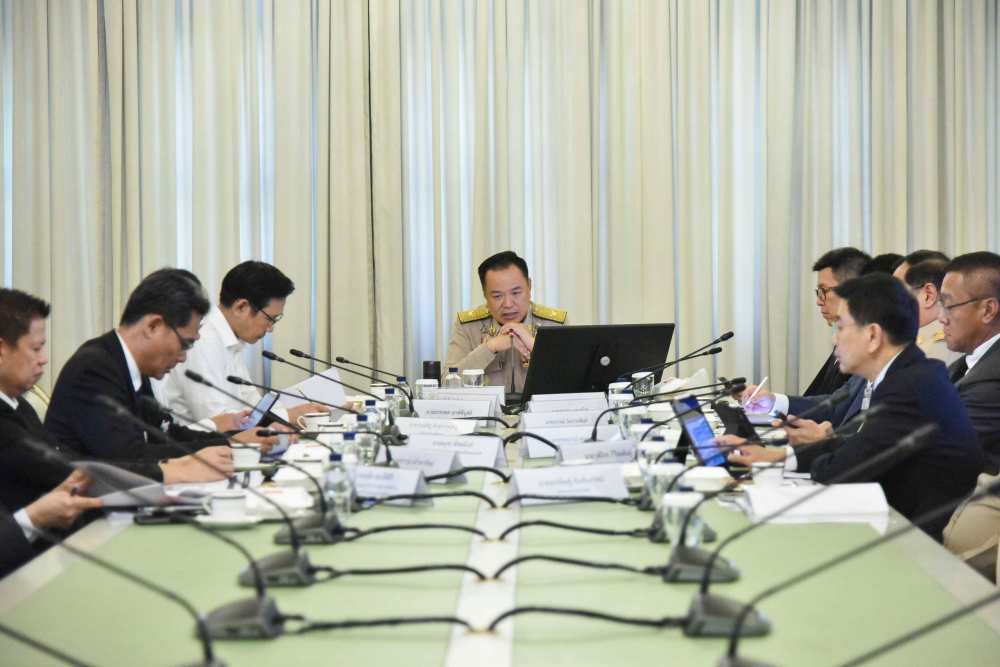
Participating in the meeting were Thai Deputy Prime Minister and Minister of Transport Phiphat Ratchakitprakarn, Deputy Prime Minister and Minister of Finance Ekniti Nitithanprapas, Minister of Energy Auttapol Rerkpiboon, Secretary General of the Office of National Economic and Social Development Council (NESDC) Danucha Pichayanan, Permanent Secretary to Ministry of FinanceLavaron Sangsnit, Permanent Secretary to Ministry of Commerce Vuttikrai Leewiraphan, and representatives of relevant agencies.
According to the Prime Minister, the escalating Middle East situation has been affecting world’s crude oil supply and maritime transport system, resulting in an increase of energy prices in the international markets. As this situation ultimately impacts the cost of living and national economic costs, the Government has been closely monitoring the developments in order to promptly implement responsive measures to minimize potential impacts on the people.
The Thai Government has placed utmost priority on the public’s wellbeing. Relevant agencies have been instructed to come up with responsive measures in all dimensions, especially regarding energy management, price stabilization, and people’s cost of living. These measures must be implemented in such a way that does not impose additional burdens on the public, while strengthening the country’s long-term energy security and resilience.
NESDC also reported on the latest developments in the Middle East, including potential impacts on the global economy and Thailand. Guidelines for energy management and measures to safeguard people’ cost of living is also presented at the meeting. The Prime Minister has assigned NESDC, as the coordinating agency, to integrate operational plans of all relevant agencies to ensure that the Government’s energy management is carried out in a unified and comprehensive manner.
Thai Ministry of Energy has reported measures to gradually enhance strategic petroleum reserves, and affirmed that Thailand currently maintains a sufficient volume of oil reserves. Supplies of natural gas also remain adequate and are not a cause for present concern. Additional energy management plans are also being prepared, including increasing electricity generation from alternative sources, i.e., coal and hydropower, to reinforce the stability of Thailand’s energy system.
The Prime Minister emphasized that the Government will continue to closely monitor the situation developments amid the uncertainty of global energy markets. It also stands ready to implement necessary measures to maintain energy stability, such as diversifying sources of oil and natural gas imports and introducing energy-saving measures. The Prime Minister reaffirmed that all policies will be implemented with the aim of minimizing impacts on the people.