(AseanAll) — On September 30, 2025, The President of the Republic of Timor-Leste, J. Ramos-Horta, met with the Minister of Justice, Sérgio Hornai, at the Nicolau Lobato Presidential Palace to analyze the progress in strengthening the justice sector in Timor-Leste, with the establishment of the Supreme Court of Justice as the main priority.
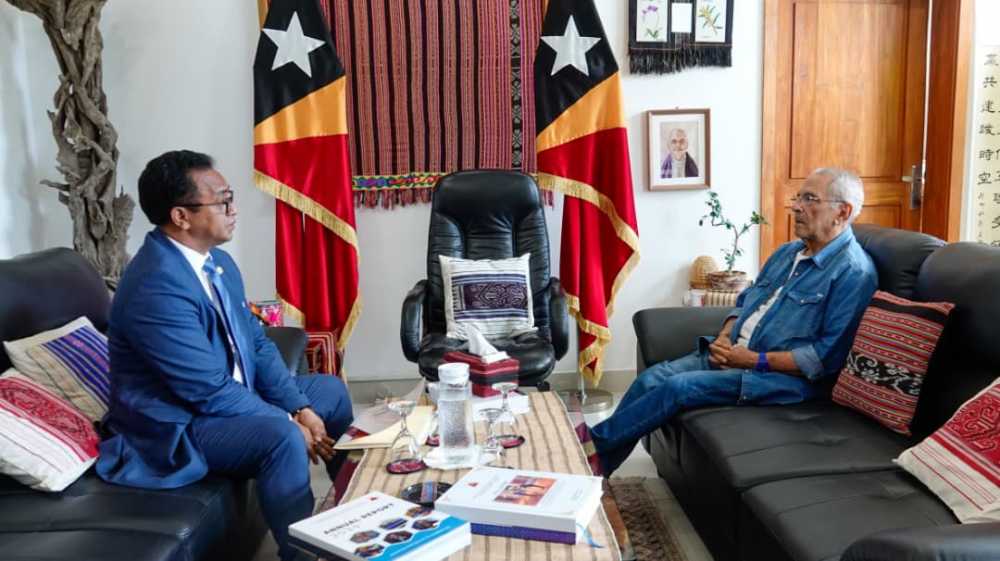
Sérgio Hornai informed the Head of State about the ongoing coordination between the Government, the National Parliament, and the judiciary to create the necessary legal and logistical framework for the installation of the new high court. The meeting underlined the President’s commitment to accelerating the formation of this fundamental democratic institution, considered a cornerstone of his vision for a robust rule of law.
The discussion also addressed the issue of state housing for former public office holders, a topic of national interest recently raised by the President. Sérgio Hornai explained the legal complexities surrounding the new Lifetime Pensions Law and the requirements for leasing state properties. Echoing the presidential call for a balanced solution, the Minister stressed the importance of a compassionate and respectful process. “With certainty, we are here today because we have gone through a process. That is why we must also consider it with our hearts,” he stated. “We must give dignified treatment to our former public office holders.” This statement reinforces the administration’s commitment to finding a resolution that upholds the Law while honoring the historical contributions of these individuals.
The meeting also covered broader efforts to reinforce the judicial system, including the recruitment of more judges, prosecutors, and legal professionals. When questioned by the President, Minister Sérgio Hornai also reaffirmed the zero-tolerance policy regarding illicit activities, specifically highlighting that illegal online gambling operations will not be permitted.
This dialogue underscores President Ramos-Horta’s active leadership in defending the integrity and capacity of state institutions and in seeking clear and just solutions to complex national issues.