Press Statement by the Chair of the ASEAN Foreign Ministers' Retreat 29 January 2026, Cebu City, the Philippines
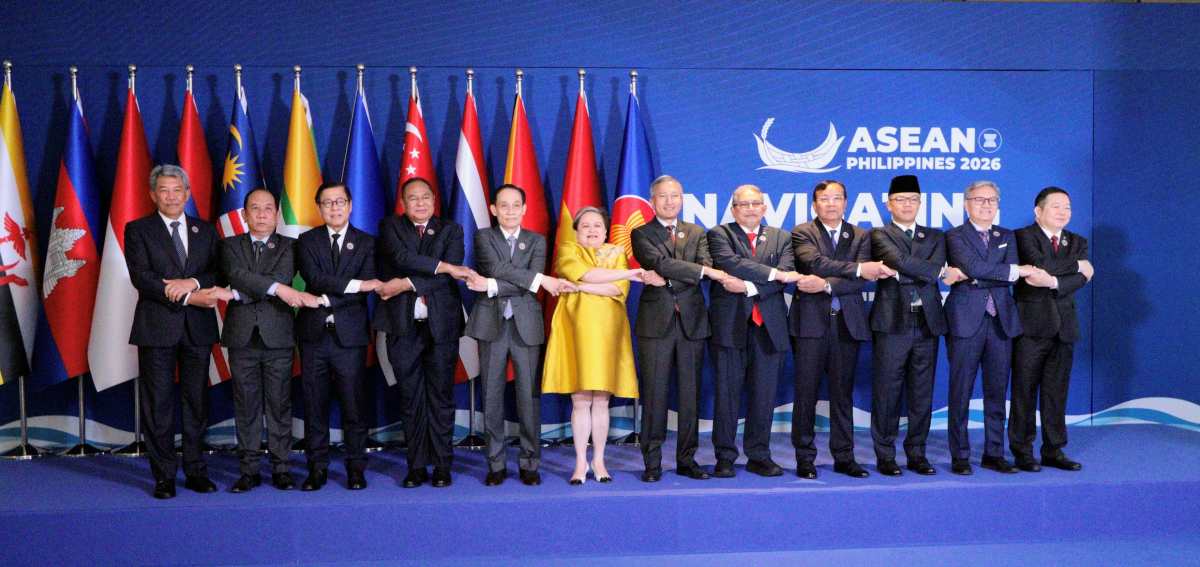
1. The ASEAN Foreign Ministers’ Retreat (AMM Retreat) was convened on 29 January 2026 in Cebu City, Philippines. The Retreat was the first major meeting under the ASEAN Political-Security Community (APSC) Pillar under the Philippines’ ASEAN Chairship of 2026 with the theme “Navigating Our Future, Together.”
2. We had candid, thoughtful, constructive, and in-depth discussions on the follow-up to the 47th ASEAN Summit and Related Summits and ASEAN’s external relations, as well as regional and international developments with a view to ensuring continuity and advancing ASEAN unity and Centrality.
3. We reaffirmed our shared commitment to maintaining and promoting peace, security and stability in the region, as well as to the peaceful resolution of disputes, including full respect for legal and diplomatic processes, without resorting to the threat or use of force, in accordance with international law, particularly the 1982 United Nations Convention on the Law of the Sea (UNCLOS).
4. We reiterated our strong commitment to upholding regionalism and multilateralism, as well as ASEAN Centrality in the evolving regional architecture, and emphasised the importance of adhering to international law, shared values and norms enshrined in the UN Charter, the Declaration on Zone of Peace, Freedom and Neutrality (ZOPFAN), the Treaty of Amity and Cooperation in Southeast Asia (TAC), the 1982 United Nations Convention on the Law of the Sea (UNCLOS), the Treaty on the Southeast Asia Nuclear Weapon-Free Zone (SEANWFZ Treaty), the 2011 Declaration on the East Asia Summit on the Principles for Mutually Beneficial Relations and the ASEAN Outlook on the Indo-Pacific (AOIP).
5. We welcomed the adoption of the ASEAN Community Vision (ACV) 2045 and its Strategic Plans last year and noted that this year marks the first year of its implementation. We underscored the importance of ensuring timely and coordinated implementation across all three Community Pillars in order to translate this Vision into concrete outcomes for ASEAN and its people. In this regard, we noted the convening of the 3rd ASEAN Future Forum this year in Ha Noi, Viet Nam, which would complement ASEAN’s collective efforts in the realisation of the Vision.
6. We expressed confidence and support towards the Philippines' priorities and deliverables in 2026, guided by its theme “Navigating Our Future, Together,” and its three main priorities, namely Peace and Security Anchors, Prosperity Corridors, and People Empowerment, which are in line with the goals of ASEAN Community building and in continuing to build upon the previous ASEAN Chairships’ priorities and achievements. We emphasised the importance of realising these priorities in advancing ASEAN’s shared vision of a resilient, innovative, dynamic, people-centred community, and in ensuring ASEAN’s continued role as a key player in the global community and in charting the future of the region. We looked forward to the implementation of these initiatives with pragmatism and determination under the Chairship of the Philippines.
7. We welcomed Timor-Leste’s full and active participation as a Member of ASEAN, underscoring its first year of participation during the Philippines’ Chairship. We acknowledged Timor-Leste’s continued efforts towards the fulfilment of the remaining milestones following its admission to ASEAN. We reaffirmed ASEAN’s commitment to supporting Timor-Leste’s integration into ASEAN processes.
8. We underscored the continued relevance of the TAC as a foundational code of conduct for interstate relations in the region and a cornerstone of regional peace and stability. We noted the growing number of High Contracting Parties (HCPs) to the TAC, reflecting the Treaty’s enduring value not only within our borders but also beyond the region. We remained committed to promoting and upholding the principles enshrined in the TAC, and emphasised the responsibility of all HCPs to fulfill their Treaty obligations.
9. We looked forward to the 50th Anniversary of the Treaty of Amity and Cooperation in Southeast Asia this year, reaffirmed the shared values enshrined in the TAC’s principles, and renewed our collective commitment to peaceful coexistence, mutual respect, and mutually beneficial cooperation. In this regard, we looked forward to the finalisation of the ASEAN Paper Outlining the Guidelines on the Modalities for HCPs’ engagement with ASEAN as one of the outcome documents of the commemoration. We further looked forward to organising commemorative initiatives for the 50th Anniversary and the signing of new HCPs to the Treaty.
10. We took note of the pending applications of Slovenia, Austria, and the Slovak Republic for accession to the TAC and looked forward to the completion of the necessary steps towards their accession. We concurred with the ASEAN Secretariat’s recommendation to consider the application of Belgium positively. We also took note of the timeline of 2 years, with a possible extension of one more year, for prospective High Contracting Parties (HCPs) to the TAC to sign their Instrument of Accession and tasked the ASEAN Secretariat to incorporate the agreed timeline in the Guidelines for Accession to the 1976 Treaty of Amity and Cooperation in Southeast Asia (TAC) accordingly. We looked forward to the signing of the Instruments of Accession of countries approved to accede to the TAC at the earliest opportunity.
11. We underscored the continued relevance of the ASEAN Regional Forum (ARF) as the leading regional security forum in the Asia-Pacific region, with a view to build mutual trust and confidence, advance preventive diplomacy, develop capacity and expertise, and foster constructive dialogue and cooperation on political and security matters and emerging challenges of common interest and concern, with ASEAN as the primary driving force. We welcomed the adoption of the Recommendations to Revitalise the ARF and looked forward to its gradual implementation starting this year. We also looked forward to the conclusion of the Manila Plan of Action 2026-2036 and adopting it during the 33rd ARF in July.
12. We welcomed the Philippines’ proposal to adopt an ASEAN Declaration on Maritime Cooperation at the 48th ASEAN Summit, which will identify specific maritime cooperation initiatives.
13. We reaffirmed the importance of the ASEAN Maritime Forum (AMF) and the Expanded ASEAN Maritime Forum (EAMF) for promoting maritime cooperation through dialogue and consultations. We looked forward to the publication of the second edition of the ASEAN Maritime Outlook and the implementation of initiatives under the EAMF this year.
14. We also reaffirmed the roles of the ASEAN Defence Ministers’ Meeting (ADMM) and ADMM-Plus in promoting strategic dialogue and enhancing practical cooperation including through the seven ADMM-Plus Experts’ Working Groups. We looked forward to the issuance of the Joint Declaration on the 20th Anniversary of the Establishment of the ADMM. We also welcomed the upcoming ADMM-Plus Experts' Working Group Combined FTX, Exercise Trident Resolve, to be held from 20 to 26 September 2026 in Banten, Indonesia.
15. We acknowledged the vital role of the ASEAN Ministerial Meeting on Transnational Crime (AMMTC) and its subsidiary mechanisms in advancing ASEAN’s law enforcement cooperation and in spearheading cross-sectoral and cross-pillar coordination in addressing the multi-dimensional aspects of transnational crimes, particularly the growing threat of cybercrime and online scams and trafficking in persons (TIPs) in the region, including people smuggling. We also welcomed the convening of the International Conference on the Global Partnership against Online Scams in December 2025 in Bangkok. We looked forward to the convening of the 20th ASEAN Ministerial Meeting on Transnational Crime (AMMTC) and the adoption of its outcome documents, including the 1st ASEAN Trafficking in Persons Report.
16. We reiterated our commitment to preserve the Southeast Asian region as a nuclear weapon-free zone and free of all other weapons of mass destruction as enshrined in the Treaty on the Southeast Asia Nuclear Weapon-Free Zone (SEANWFZ) and the ASEAN Charter. We stressed the importance of the full and effective implementation of the SEANWFZ Treaty, including through the Plan of Action to Strengthen the Implementation of the SEANWFZ Treaty (2023-2027). We noted that the Executive Committee of the SEANWFZ Commission is continuing to explore the possibility of allowing individual Nuclear Weapon States (NWS) which are willing to sign and ratify the Protocol to the SEANWFZ Treaty without reservations and provide prior formal assurance of this commitment in writing to go ahead with the signing. We welcome any NWS that are ready to do so. We reaffirmed our commitment to continuously engage all the NWS including those with reservations, and intensify efforts to resolve all outstanding issues in accordance with the objectives and principles of the SEANWFZ Treaty.
17. We also reaffirmed our commitment to enhancing the profile of the SEANWFZ Treaty globally, including through engaging other nuclear weapon-free zones (NWFZs). In this connection, we welcomed the adoption of the ASEAN-sponsored biennial resolution (80/47) on the SEANWFZ Treaty at the 80th Session of the UNGA on 1 December 2025, which reiterates the importance of the Treaty in contributing to international peace and security and supporting global efforts on nuclear disarmament and non‑proliferation. We stressed that progress on nuclear disarmament is urgently needed and reiterated the need for strengthening the commitment to a world free of nuclear weapons amidst the heightened geopolitical tension.
18. We looked forward to the finalisation of the ASEAN contribution to the Chapter IV of the Comprehensive Study of the Question of Nuclear Weapon-Free Zones in All Its Aspects to the Treaty of the Southeast Asia Nuclear-Weapon-Free Zone and the Memorandum on Activities Related to the SEANWFZ Treaty for the NPT Review Conference.
19. We recognised the role and continued contribution of the ASEAN Institute for Peace and Reconciliation (ASEAN-IPR) in advancing peace and stability in the region.
20. We welcomed the appointment of H.E. Ma. Theresa P. Lazaro as the Special Envoy of the ASEAN Chair on Myanmar for 2026. We expressed our full support for the Special Envoy in carrying out her mandate in facilitating mediation of the dialogue process towards an inclusive, durable, and peaceful solution to the political crisis in Myanmar in line with the Five-Point Consensus (5PC).
21. We had candid discussions on the evolving developments in Myanmar and reaffirmed our commitment to advancing the implementation of the 5PC. We noted that any meaningful political progress can only take place in an environment of peace, security, and inclusivity, supported by the cessation of violence and inclusive dialogue among all relevant stakeholders. We reiterated our united position that the 5PC remains our primary reference to address the political crisis in Myanmar and further affirmed the corresponding Leaders’ decisions. We emphasised ASEAN’s commitment and role to assist Myanmar in charting a future and a peaceful and lasting solution to the crisis which is both Myanmar-owned and Myanmar-led, while reaffirming that Myanmar remains an integral part of ASEAN. We reaffirmed ASEAN’s position on the importance of free, fair, peaceful, transparent, inclusive, and credible general elections in Myanmar. We noted the conclusion of the three phases of the general elections.
22. We expressed support for the continuous delivery of humanitarian assistance to the people of Myanmar without discrimination through the ASEAN Coordinating Centre for Humanitarian Assistance on disaster management (AHA Centre), in line with the 5PC. We expressed appreciation for the resources contributed by ASEAN Member States, external partners, and the private sector, which includes the construction of pre-fabricated schools and religious buildings in affected communities. We reiterated our commitment to expand the scale and reach of humanitarian aid by leveraging ASEAN's partnerships and engaging relevant parties in the process.
23. We acknowledged the importance of the Informal Consultation on the implementation of the Five-Point Consensus, as well as the Extended Informal Consultation, in ensuring continuity and sustainability in ASEAN’s efforts to address the situation in Myanmar. We looked forward to the conclusion of deliberation of the ASEAN Senior Officials on the proposal of a longer-term ASEAN Special Envoy on Myanmar to ensure continuity in the role in line with the mandate given by the ASEAN Leaders.
24. We welcomed the Joint Statement of the 3rd Special General Border Committee (GBC) Meeting between the Kingdom of Cambodia and the Kingdom of Thailand of 27 December 2025, and called for its full and effective implementation, with a view to promoting the peaceful resolution of disputes in accordance with international law, thereby contributing to peace and stability between the two countries and in the wider region. We underscored the importance of the ASEAN Observer Team (AOT) in verifying and ensuring the effective implementation of all measures based on its mandate. We further welcomed the extension of the mandate of the AOT and noted the steps taken by Malaysia to ensure a smooth transition of the coordinator role to the Philippines as the ASEAN Chair.
25. We emphasised the importance of ASEAN Centrality and unity in our engagement with external partners through ASEAN-Plus One, ASEAN Plus Three (APT), East Asia Summit (EAS), ARF, and ADMM-Plus in line with the ASEAN Outlook on the Indo-Pacific (AOIP). We underscored the importance of a coherent, principled, and strategic approach to ASEAN’s partnerships. We reiterated that our external engagements are ASEAN-driven, relevant, strategic, mutually beneficial, and responsive to current and emerging challenges while ensuring ASEAN Centrality, adheres to existing ASEAN processes and procedures, support our community-building, and contribute to regional peace, stability, and sustainable development. We highlighted that effective coordination, transparency, and alignment with ASEAN’s priorities under the ACV 2045 are essential to ensure that ASEAN’s External Relations continue to serve ASEAN’s long term goals and interests.
26. We underscored the value and relevance of the AOIP in promoting regional peace, security, stability, and prosperity in light of geopolitical tensions affecting the region, including in building mutual trust and confidence as well as reinforcing an open, 5 FINAL transparent, resilient, inclusive and rules-based regional architecture with ASEAN at the centre that upholds international law. We reaffirmed our commitment to promote the implementation of concrete AOIP projects and activities, under the four priority areas in our engagement with external partners, through the various ASEAN-led mechanisms.
26. We underscored the value and relevance of the AOIP in promoting regional peace, security, stability, and prosperity in light of geopolitical tensions affecting the region, including in building mutual trust and confidence as well as reinforcing an open, transparent, resilient, inclusive and rules-based regional architecture with ASEAN at the centre that upholds international law. We reaffirmed our commitment to promote the implementation of concrete AOIP projects and activities, under the four priority areas in our engagement with external partners, through the various ASEAN-led mechanisms.
27. We noted the broad, in-principle support expressed by ASEAN Member States at the 47th ASEAN Summit in Kuala Lumpur for Turkiye’s application to become an ASEAN Dialogue Partner, as well as the Assessment Paper on ASEAN’s Formal Partnerships prepared by the ASEAN Secretariat, which includes a recommendation to decide by 2026 on the future of the moratorium on new Dialogue Partnerships. We looked forward to the continued discussions at the CPR and at the SOM in this regard.
28. On Papua New Guinea’s engagement with ASEAN, we noted the general support for the recommendations regarding Papua New Guinea’s role as a Special Observer to ASEAN. We tasked our relevant officials to continue discussions and work towards consensus on the remaining pending items at an appropriate time.
29. We also exchanged views on regional and international issues. We acknowledged that the global environment we face today is marked by overlapping pressures, including intensifying geopolitical competition, growing economic uncertainty, and the erosion of multilateral systems and the rules-based order through unilateral actions. We noted that these are compounded by transnational challenges such as climate change, misuse of emerging technologies including artificial intelligence, and other increasingly complex security risks that no country can address alone.
30. We discussed the situation in the South China Sea, during which concerns were expressed on land reclamations, activities, serious incidents in the area, including actions that put the safety of all persons at risk, damage to the marine environment, which have eroded trust and confidence, increased tensions, and may undermine peace, security, and stability in the region. We reaffirmed the need to enhance mutual trust and confidence, exercise self-restraint in the conduct of activities that would complicate or escalate disputes and affect peace and stability and avoid actions that may further complicate the situation. We further reaffirmed the need to pursue peaceful resolution of disputes, in accordance with international law, particularly the 1982 UNCLOS. We emphasised the importance of self-restraint in the conduct of all activities by claimants and all other states, including those mentioned in the 2002 Declaration on the Conduct of Parties in the South China Sea (DOC) that could further complicate the situation and escalate tensions in the South China Sea.
31. We reaffirmed the importance of maintaining and promoting peace, security, stability, safety, and freedom of navigation in and overflight above the South China Sea and recognised the benefits of having the South China Sea as a sea of peace, stability, prosperity, and sustainable development. In this regard, we underscored the importance of the full and effective implementation of the DOC in its entirety. We welcomed the positive momentum and progress achieved in the ongoing negotiations on the Code of Conduct in the South China Sea (COC). We will endeavour to conclude the negotiation of an effective and substantive COC that is in accordance with international law, particularly the 1982 UNCLOS, within 2026. We emphasised the need to maintain and promote an environment conducive to the COC negotiations, including the situation in the South China Sea, and thus welcomed practical measures that could reduce tensions and the risk of accidents, misunderstandings, and miscalculation. We stressed the importance of undertaking confidence building and preventive measures to enhance, among others, trust and confidence amongst parties, and we reaffirmed the importance of upholding international law, particularly the 1982 UNCLOS.
32. With regard to the situation in the Middle East, we reaffirmed our long-standing support for the two-state solution, which envisions a future where two independent states living in peace and security and each with recognized borders. We welcomed the resolution passed by the United Nations Security Council in November 2025, endorsing the US peace plan, and viewed the development as a positive step towards ending the humanitarian crisis and providing security in Gaza. We reiterated our view that peace initiatives in the Middle East should not, in any way, diminish the prospect for Palestinian statehood, as well as undermine the inalienable right to self-determination of the Palestinian people, in accordance with international law. We maintain that these conditions are imperative to achieving a just, lasting, and comprehensive peace in the region.